guidance
Fabricator fined £48,000 after unassessed 133kg lift cost welder part of his thumb
HSE prosecuted Fitzpatrick Fabrications Ltd after a welder working alone at its Nelson factory was crushed by a 133kg hopper, days after a near-identical incident, with no risk assessment or safe system of work in place.
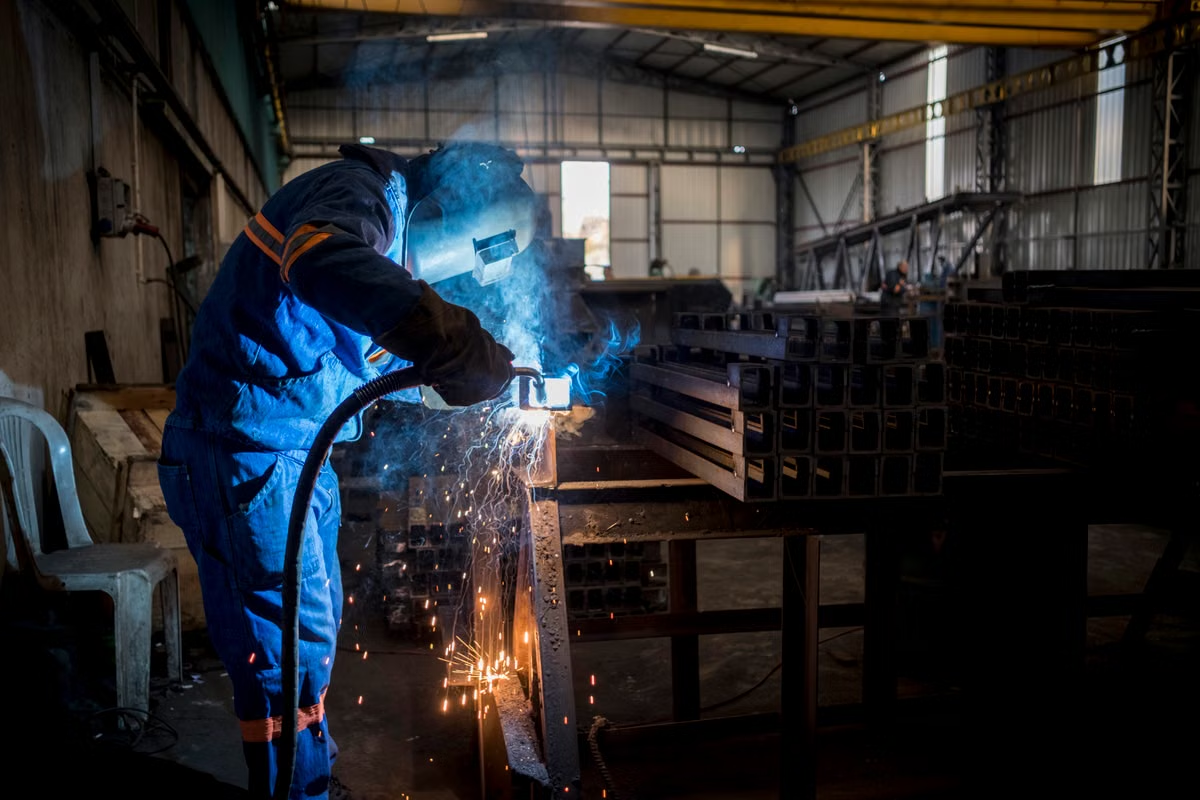
Fitzpatrick Fabrications Ltd has been fined £48,000 after a welder at its Nelson factory lost part of his right thumb when a 133kg stainless steel hopper he was repositioning alone slipped and crushed his hand.
The Lancashire sheet metal fabrication company pleaded guilty to breaching Regulation 4(1) of the Manual Handling Operations Regulations 1992 at Warrington Magistrates' Court on 6 October 2026, the Health and Safety Executive (HSE) said. It was also ordered to pay £10,089 in costs.
HSE's investigation found the company had not carried out a risk assessment for the task and had no safe system of work, so workers had not been given clear instructions on how to do the job safely. The regulator also found that a near-identical incident had happened in the days before the one that caused the injury.
HSE inspector Derek McLauchlan said: "This was a wholly preventable incident which has had a profound and long-lasting impact on Todd Marshall's life, made more shocking by the fact a near-identical incident had taken place just days before."
The incident
According to HSE, welder/fabricator Todd Marshall was working at the Fitzpatrick Fabrications factory at Malvern Mill, Nelson, at about 11.30am on 24 October 2024, welding large pieces of stainless steel to form a hopper.
The hopper was made up of five parts. Each time one side was welded, the assembly had to be lifted and turned so the next side could be welded.
Mr Marshall was doing this on his own, HSE said, holding the larger side of the 133kg hopper in the air while the smaller side rested on a desk. The hopper slipped on the smooth desk surface and came down on his hand, causing a crush injury and the partial loss of his right thumb.
In a statement reported by HSE, Mr Marshall said everyday tasks are now hard for him, and that he had been an amateur boxer before the injury and boxing had been his whole life.
The duty that was breached
Regulation 4(1) of the 1992 regulations sets out a hierarchy of duties, according to the text published on legislation.gov.uk. Employers must, so far as reasonably practicable, avoid the need for employees to carry out manual handling that involves a risk of injury.
Where it cannot be avoided, they must make a suitable and sufficient assessment of the operations, reduce the risk of injury to the lowest level reasonably practicable, and give employees general indications and, where reasonably practicable, precise information about the load.
HSE's manual handling guidance defines manual handling as transporting or supporting a load by hand or bodily force, including lifting, putting down, pushing, pulling, carrying or moving loads.
McLauchlan said businesses should always think about the safest way to carry out manual handling, which means a robust risk assessment and considering tools such as the Manual Handling Assessment Charts (MAC tool) to plan the task.
He added: "The company failed in its duty to properly plan this task, and the fine imposed should serve as a clear reminder to everyone that HSE will hold to account those who fail to keep their workers safe."
The practical lesson
HSE's MAC tool is used to assess the risks from lifting, lowering, carrying and team manual handling, and is designed to help users understand, interpret and categorise the level of risk from known manual handling risk factors, the regulator said.
Its leaflet Manual handling at work (INDG143) is aimed at employers and gives practical advice on reducing the risk of injury from manual handling and meeting duties under the 1992 regulations.
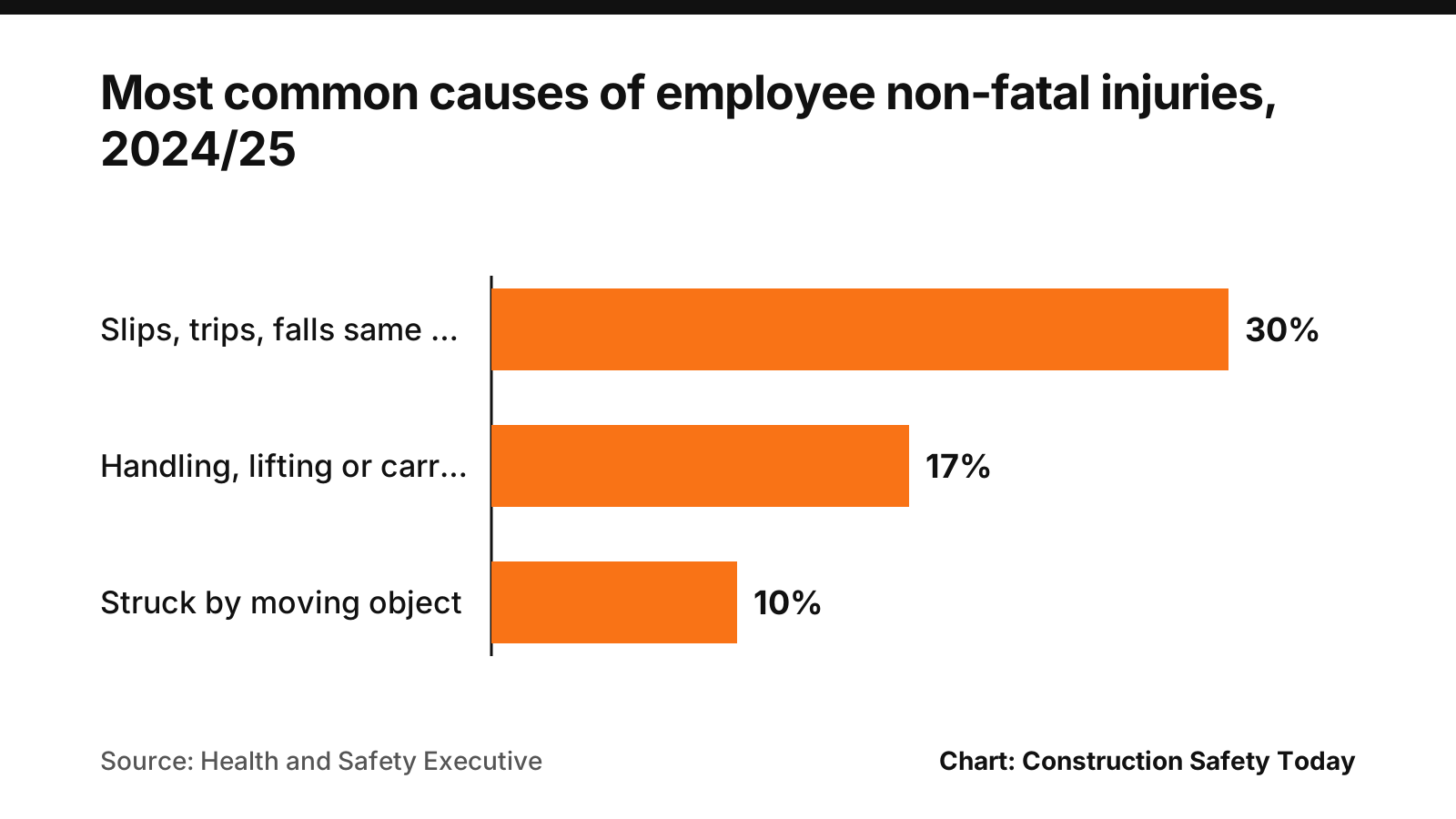
HSE statistics show handling, lifting or carrying remains one of the most common causes of workplace injury. It accounted for 17% of non-fatal injuries to employees reported under RIDDOR in 2024/25, second only to slips, trips or falls on the same level.
| Kind of accident (RIDDOR, 2024/25) | Share of employee non-fatal injuries |
|---|---|
| Slips, trips or falls on same level | 30% |
| Handling, lifting or carrying | 17% |
| Struck by moving object | 10% |
In total, employers reported 59,219 employee non-fatal injuries under RIDDOR in 2024/25, while the Labour Force Survey put self-reported non-fatal injuries at 680,000 workers, according to HSE.
The prosecution was brought by HSE enforcement lawyer Tom Ledden-Rocks and paralegal officer Stephen Grabe. HSE said it does not pass sentences, set guidelines or collect fines; courts must follow the relevant sentencing guidelines unless satisfied that doing so would be contrary to the interests of justice.
Companies House lists Fitzpatrick Fabrications Ltd as an active company classified under SIC code 25110, manufacture of metal structures and parts of structures, with a registered office at Unit 6 Pendle Court, Nelson.
Sources
- Health and Safety Executive (opens in a new tab) (accessed 2026-10-09)
- legislation.gov.uk (The National Archives) (opens in a new tab) (accessed 2026-10-09)
- Health and Safety Executive (opens in a new tab) (accessed 2026-10-09)
- Health and Safety Executive (opens in a new tab) (accessed 2026-10-09)
- Health and Safety Executive (opens in a new tab) (accessed 2026-10-09)
- Health and Safety Executive (opens in a new tab) (accessed 2026-10-09)
- Companies House (opens in a new tab) (accessed 2026-10-09)
This story was researched from the primary sources above and checked against them before publication. Spotted an error? Tell us and we will correct it promptly.