guidance
RAIB asks HSE to review driver guidance after fatal van collision at Kent user worked crossing
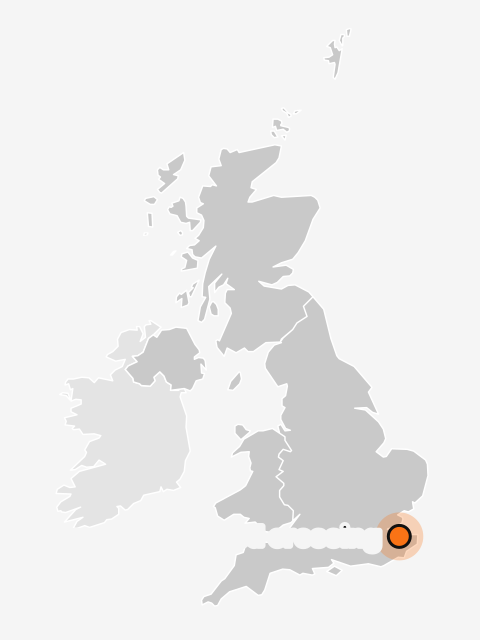
The Rail Accident Investigation Branch has made four recommendations after a passenger train struck a stationary delivery van at Bax user worked crossing near Teynham, killing the self-employed driver.
The Rail Accident Investigation Branch (RAIB) has asked the Health and Safety Executive to review its guidance to employers of people who drive for work, after a delivery van driver was killed when a passenger train struck his stationary vehicle at Bax user worked crossing in Kent.
RAIB published its 58-page report on 9 November 2026. The collision happened at about 12:42 on 13 July 2025, when a Ramsgate to London Victoria service travelling at about 71 mph (114 km/h) hit the van on the crossing near Teynham. The van driver was fatally injured.
RAIB has investigated a delivery van collision at a user worked crossing near Teynham before. Its 2018 report into the Frognal Farm collision of 23 October 2017, in which a parcel delivery van driver suffered serious injuries, also made four recommendations, to Network Rail, the Department for Transport and the Office of Rail and Road, which included improving signage at private crossings and reviewing the concept of authorised users.
Andrew Hall, Chief Inspector of Rail Accidents, said: "Private user worked crossings are a 19th century concept operating in a 21st century world of more dense, faster rail services, more rural housing and abundant home deliveries."
What RAIB found
Bax crossing has outward opening gates on both sides of the line and an overlay miniature stop light system. The light shows green when no train is approaching and changes to red, with an audible warning, once a train is detected. Signs tell users to check for a green light before opening both gates, before crossing with a vehicle, and again before closing both gates.
RAIB found the van was stationary on the crossing because the green light showing when the driver arrived almost certainly led them to believe it was safe to enter once the entry gate was open, even though the exit gate was still closed. The signage and the lack of road markings did not effectively guide the driver to the correct procedure, RAIB said.
Among the underlying factors, RAIB found a project to develop new signage for private crossings had not sufficiently considered how diverse information sources may influence user behaviour. It also found that once Network Rail had fitted miniature stop lights at a crossing, further upgrades became unlikely, leaving safe use reliant on signs being understood and obeyed.
The driver was self-employed but working on behalf of a logistics company. RAIB found the training and guidance provided had not prepared them to use the crossing safely.
Although not linked to the accident, RAIB also observed differing interpretations of the concept of an authorised user within railway processes for identifying and assessing level crossing risk.
The recommendations
The first recommendation asks Network Rail to review the design of user worked crossings to reduce risk to users. The second asks the Department for Transport, in consultation with the Office of Rail and Road (ORR) and rail industry bodies in Great Britain, to update the framework of legal requirements and the guidance given to road users.
The third asks the HSE to review guidance to organisations employing people to drive or ride for work, or engaging self-employed people to do so, on the safe use of user worked crossings. The fourth asks Network Rail to review the role of authorised users in the guidance it provides to its staff.
RAIB said its sole purpose is to prevent future accidents; it does not establish blame or liability or carry out prosecutions.
A repeating pattern
Mr Hall said another delivery van driver was killed at a user worked crossing in Lancashire in August 2026, and that because a train can be derailed by striking a delivery van, both accidents could have had serious consequences for people on board. RAIB's separate announcement places that accident at Martin Lane user worked level crossing at about 15:15 on 29 August 2026, where two passengers sustained minor injuries. Martin Lane, like Bax, has manually operated gates and a miniature stop light system with signage.
Referring to the Frognal Farm report, Mr Hall said: "Eight years later, I urge the rail industry duty holders, the domestic delivery industry, the Office of Rail and Road, and the Department for Transport to find effective ways to mitigate this obvious risk before there is further tragedy."
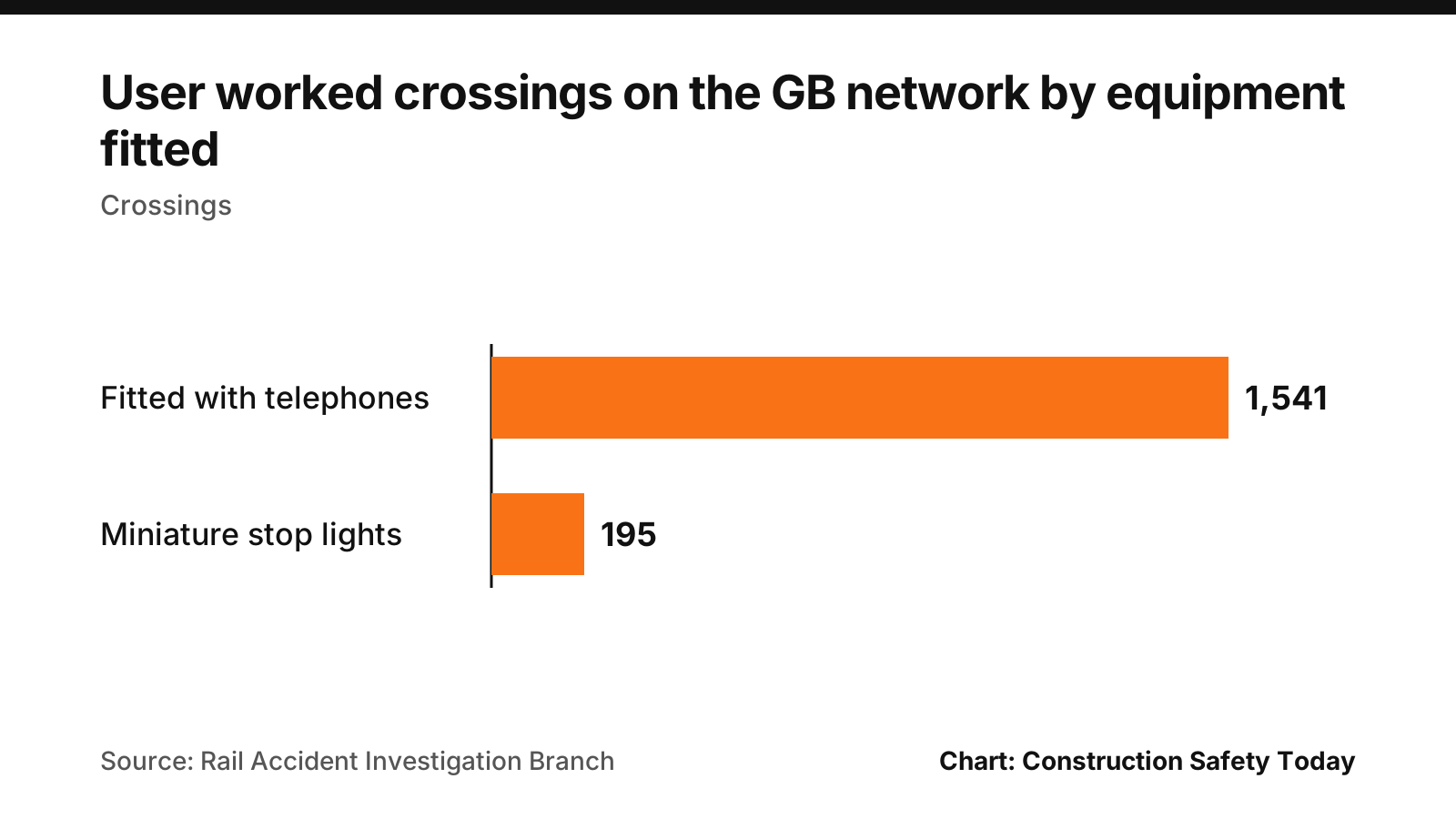
RAIB's summary of learning on user worked crossings says 22 of its 79 level crossing investigations have involved user worked crossings on private roads. Citing RSSB 2021 data, it puts the number of such crossings on the GB national network at around 2,100, of which 1,541 have telephones and 195 have miniature stop lights.
| User worked crossings (RAIB, RSSB 2021 data) | Number |
|---|---|
| Fitted with telephones | 1,541 |
| Fitted with miniature stop lights | 195 |
ORR says it is in the process of reviewing its guidance documents on user worked crossings.
On the record: Department for Transport, Office of Rail and Road, RSSB
Sources
- Rail Accident Investigation Branch (GOV.UK) (opens in a new tab) (accessed 2026-11-09)
- Rail Accident Investigation Branch (GOV.UK) (opens in a new tab) (accessed 2026-11-09)
- Rail Accident Investigation Branch (GOV.UK) (opens in a new tab) (accessed 2026-11-09)
- Rail Accident Investigation Branch (GOV.UK) (opens in a new tab) (accessed 2026-11-09)
- Office of Rail and Road (opens in a new tab) (accessed 2026-11-09)
This story was researched from the primary sources above and checked against them before publication. Spotted an error? Tell us and we will correct it promptly.