initiatives
Calder Hall safety plans have had to change as decommissioning strips out hazards, Sellafield says
Sellafield Ltd says safety plans for the world's first commercial nuclear power station have had to change to match the site as it is now, 70 years after Calder Hall opened.
Sellafield Ltd has said safety plans for Calder Hall have had to change to match the site as it is today, as demolition of the world's first commercial nuclear power station gathers pace 70 years after it opened.
In a case study published on 15 October 2026, two days before the anniversary of the station's opening on 17 October 1956, Sellafield Ltd said the way Calder Hall is managed safely has changed as fuel, asbestos and redundant plant have been removed.
The company said the station was built to generate electricity, with buildings, equipment and systems designed to keep it running. Taking it apart has followed a planned sequence: removing fuel, isolating plant and services, stripping out asbestos and other hazards, then making the buildings safe for demolition.
According to Sellafield Ltd, that work has given teams a much clearer picture of the hazards that remain, and teams now need safety plans that match both the current state of the site and the work taking place there.
What has been removed
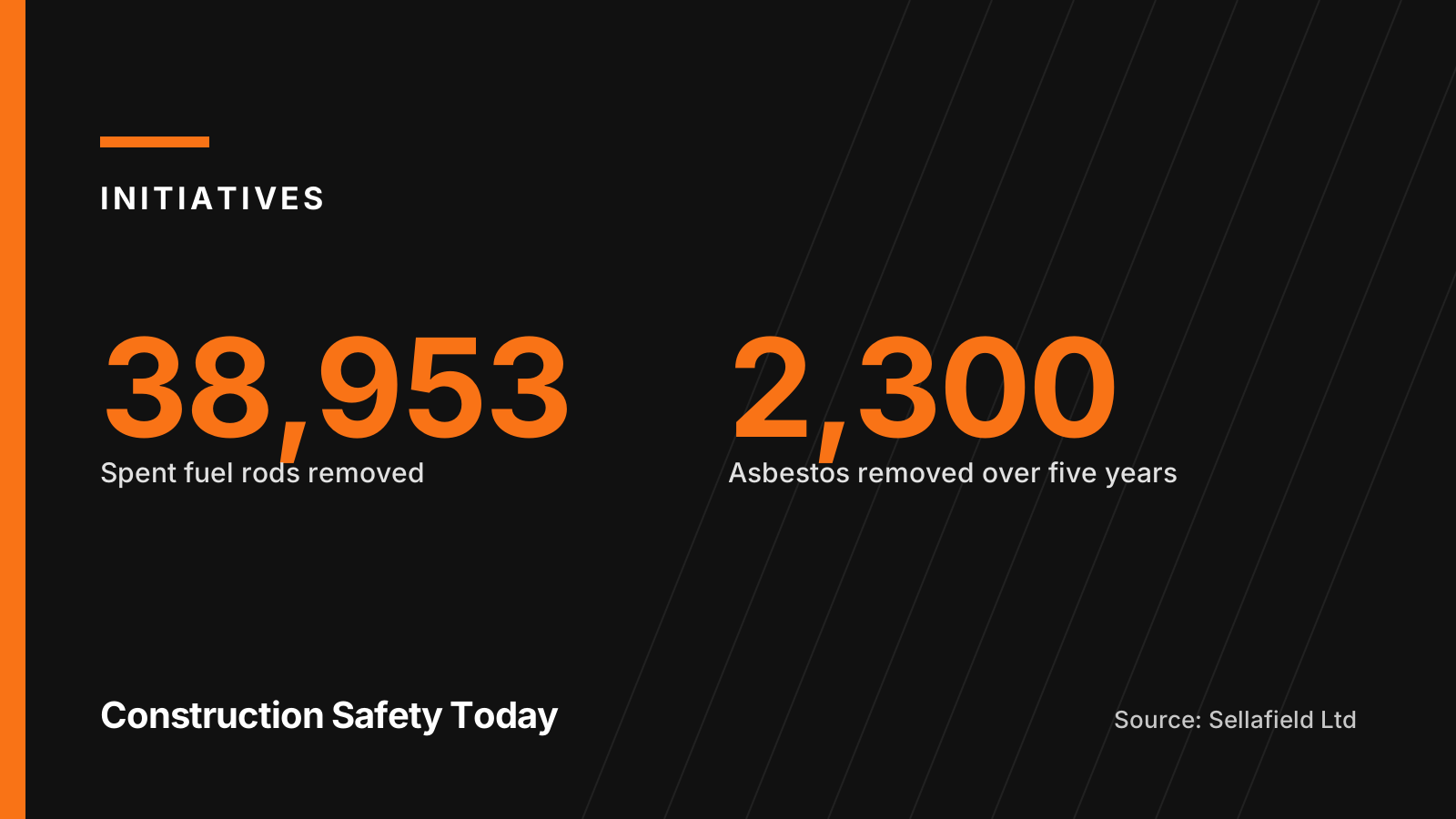
Calder Hall's four Magnox reactors generated electricity for 47 years before the station closed in March 2003. Sellafield Ltd announced on 3 September 2019 that 38,953 spent fuel rods had been retrieved from the four reactors, with defueling having begun in 2011.
Stuart Latham, head of remediation for Sellafield Ltd, said at the time: "The defueling team have completed the task safely and professionally and have a made a huge contribution to our mission."
The cooling towers have been taken down and, according to the 2026 case study, thousands of tonnes of asbestos have been removed from the station and nearby buildings. A Nuclear Decommissioning Authority (NDA) blog post put the asbestos figure at 2,300 tonnes removed over five years, describing it as the largest asbestos removal project in Europe at the time.
The same blog said the external supporting steelwork and stairwells on each of the station's 16 heat exchangers had been dismantled, with each set weighing about 340 tonnes and material recycled where possible.
Sellafield Ltd said other redundant plant, pipework and structures have also been dismantled, and the main admin building is being demolished. More buildings and structures will soon be taken down, the company said.
Making room for the SIXEP Continuity Plant
Sellafield Ltd said demolition has a practical purpose beyond clearing redundant buildings. Land at the Sellafield site is limited, and removing parts of Calder Hall that are no longer needed will create space for future facilities, including supporting the SIXEP Continuity Plant.
The existing Site Ion Exchange Effluent Plant (SIXEP) has operated since 1985, removing radioactivity from site effluent before discharge to sea. Sellafield Ltd has said the plant has no backup and some single point failure mechanisms.
In August 2026 the company said the replacement SIXEP Continuity Plant was three-quarters complete and on track to begin operating in 2029. It is being built through the Programme and Project Partners model, set up in 2019, which brings together Sellafield Ltd, KBR, Amentum, Morgan Sindall Infrastructure and Altrad Babcock.
Lessons for the NDA group
Sellafield Ltd said Calder Hall is helping it learn how to decommission a nuclear power station, including how safety plans change as hazards are removed, how demolition can be carried out safely and how land can be prepared for future use.
The company said what teams learn at Calder Hall will help other decommissioning projects at Sellafield and across the NDA group.
Calder Hall was the first nuclear power station in the world to be connected to the national grid, and a further 14 reactors of the same design were built across the UK. The station covers more than 43 acres of the Sellafield site on the Cumbrian coast.
In 2019 Sellafield Ltd said the reactor buildings would be placed into a state known as care and maintenance. The 2026 case study does not restate the status or timetable for the reactor buildings.
On the record: Sellafield Ltd
Sources
- Sellafield Ltd (GOV.UK) (opens in a new tab) (accessed 2026-10-15)
- Sellafield Ltd and Nuclear Decommissioning Authority (GOV.UK) (opens in a new tab) (accessed 2026-10-15)
- Sellafield Ltd (GOV.UK) (opens in a new tab) (accessed 2026-10-15)
- Nuclear Decommissioning Authority (gov.uk blog), written by Sellafield Ltd corporate affairs officer (opens in a new tab) (accessed 2026-10-15)
- Sellafield Ltd (GOV.UK) (opens in a new tab) (accessed 2026-10-15)
- Sellafield Ltd (GOV.UK) (opens in a new tab) (accessed 2026-10-15)
This story was researched from the primary sources above and checked against them before publication. Spotted an error? Tell us and we will correct it promptly.