guidance
City Electrical Factors fined £4m after unsecured 231kg load crushed forklift spotter
HSE found no risk assessment or lift plan for a routine loading task at the Telford-based wholesaler's Proteus Switchgear division, where a worker steadying a load suffered brain and spine injuries.
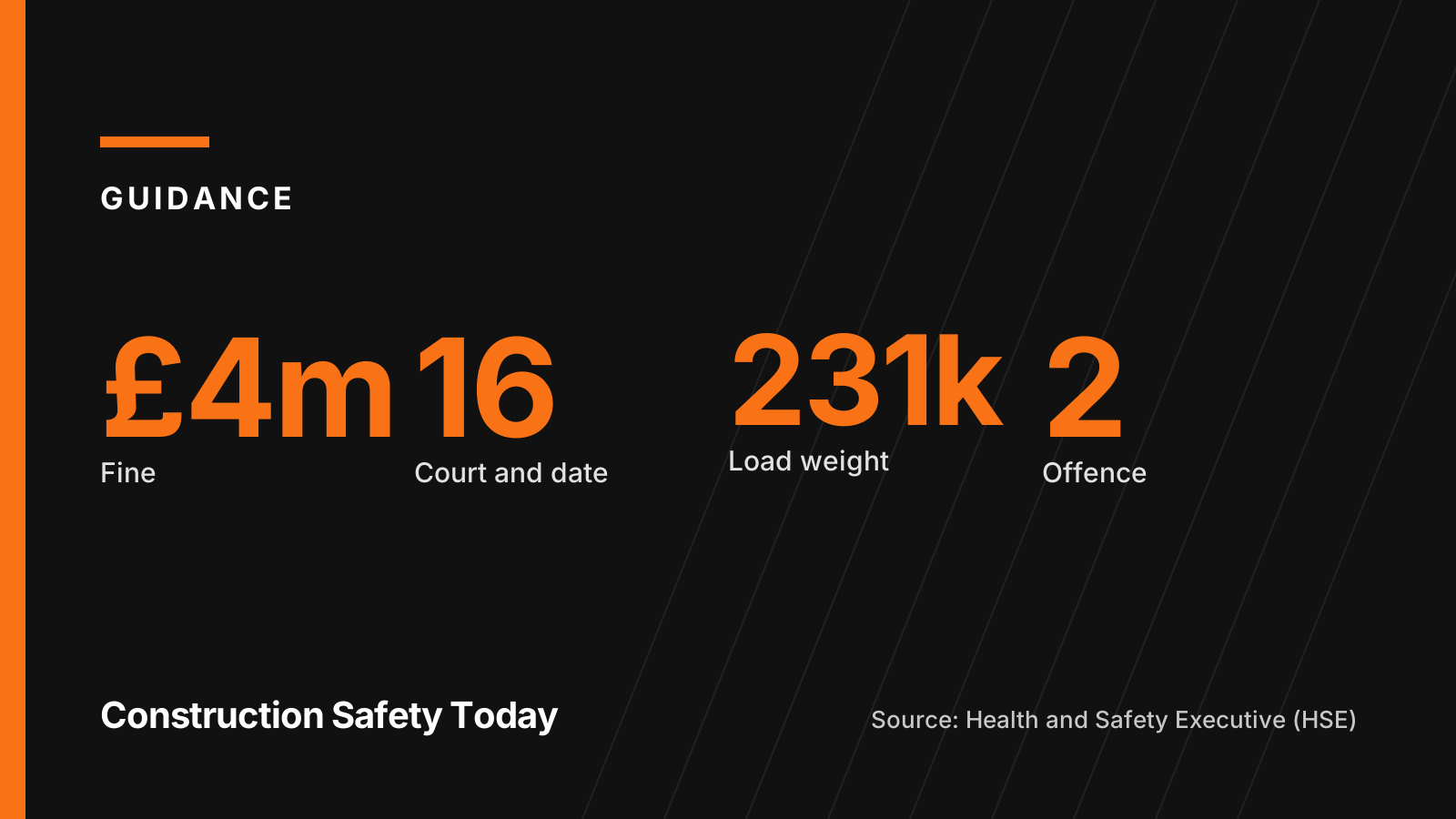
City Electrical Factors Limited has been fined £4m after a 231kg switchboard load fell from a forklift to which it had not been secured, crushing an employee acting as a spotter at its Proteus Switchgear Industrial Division, the Health and Safety Executive (HSE) said.
The company pleaded guilty to breaching Section 2(1) of the Health and Safety at Work etc. Act 1974 at Birmingham Magistrates Court on 16 October 2026 and was ordered to pay £6,304 in costs, according to HSE.
The incident happened on 4 October 2024. HSE said the 40-year-old worker, from Telford, was steadying the load while a forklift truck lifted switchboard equipment onto a flatbed lorry. The load was not secured to the forklift and fell on him.
He suffered brain and spine injuries and underwent lifesaving surgery. HSE said he can no longer do anything for himself, cannot communicate with others, lives in a care home and needs round-the-clock care.
HSE inspector Keeley Eves said: "To make matters worse it was completely avoidable and caused by a failure to properly plan for the job taking place."
What the investigation found
HSE's investigation found the company had not ensured the lifting operation was properly planned by a competent person, appropriately supervised and carried out safely. There was no risk assessment and no lift plan, and employees had been given no information or instructions about the task, even though it was a regular activity.
The regulator said the load could have been secured to the forklift using anchor points that were already fitted. It also had lifting eyes welded to it, which HSE said meant the crane on the delivery lorry could have been used as a safer alternative.
Instead, HSE said, employees were appointed as spotters and expected to steady loads while they were moved and lifted, a system of work it described as unsafe and unnecessary.
Eves said: "Loading and unloading operations remain one of the most hazardous transport activities in the workplace. Employers must ensure that lifting operations are properly planned by competent persons, supervised and carried out safely."
The legal duty
Regulation 8(1) of the Lifting Operations and Lifting Equipment Regulations 1998 (LOLER) requires every employer to ensure that every lifting operation involving lifting equipment is properly planned by a competent person, appropriately supervised and carried out in a safe manner.
Section 2(1) of the 1974 Act, the offence the company admitted, places a duty on every employer to ensure, so far as is reasonably practicable, the health, safety and welfare at work of all its employees.
HSE's guidance on planning and organising lifting operations says the plan for any lift must address the foreseeable risks involved in the work and identify the resources, including people, needed to complete the job safely. Attaching, detaching and securing loads is among the factors the guidance says a lift plan should consider, and it says supervision should be proportionate to the risk.
The company
HSE described City Electrical Factors Limited as a Telford-based electrical wholesaler and manufacturer. Companies House records its registered office as Georgina Mackie House, 141 Farmer Ward Road, Kenilworth, Warwickshire, with a registered SIC code of 46499, wholesale of household goods not elsewhere classified.
HSE named the site of the incident as the company's Proteus Switchgear Industrial Division. Trade body BEAMA lists Proteus Switchgear as a member at Stafford Park 12, Telford, Shropshire, and Proteus Switchgear says it manufactures bespoke switchgear to customer specification at facilities in Telford.
The prosecution was brought by HSE enforcement lawyer Julian White and paralegal officer Lynne Thomas, with the investigation supported by visiting officer Sarah Ough. HSE said it does not pass sentences, set guidelines or collect fines, and that courts must follow the relevant sentencing guidelines unless satisfied that doing so would be contrary to the interests of justice.
The wider picture
HSE's latest headline figures record 126 workers killed in work-related accidents, 59,219 injuries to employees reported under the Reporting of Injuries, Diseases and Dangerous Occurrences Regulations (RIDDOR), and 680,000 working people sustaining an injury at work according to the Labour Force Survey.
Sources
- Health and Safety Executive (opens in a new tab) (accessed 2026-10-16)
- legislation.gov.uk (The National Archives) (opens in a new tab) (accessed 2026-10-16)
- legislation.gov.uk (The National Archives) (opens in a new tab) (accessed 2026-10-16)
- Health and Safety Executive (opens in a new tab) (accessed 2026-10-16)
- Companies House (opens in a new tab) (accessed 2026-10-16)
- Health and Safety Executive (opens in a new tab) (accessed 2026-10-16)
- BEAMA (opens in a new tab) (accessed 2026-10-16)
This story was researched from the primary sources above and checked against them before publication. Spotted an error? Tell us and we will correct it promptly.