guidance
FASET guidance places roof over-netting towards the bottom of the fall protection hierarchy
The safety netting trade body's advice for clients and contractors says nets slung over fragile roofs should only be used once every option for netting from beneath has been exhausted.
Fall Arrest Safety Equipment Training (FASET) has issued guidance for clients, managers and site workers on procuring, supervising and installing safety nets over existing roofs, telling the industry to treat the method as a last resort.
The trade association, which represents the safety netting and temporary safety systems industries, said roof over-netting should be viewed as the last resort for fall protection in work such as over-cladding a roof or fitting solar panels, and that all other options should be assessed before it is selected.
Before over-netting is chosen, FASET said, efforts should be made to open up access to the underside of the roof so conventional safety nets can be hung beneath it.
Where it sits in the hierarchy
FASET said the Work at Height Regulations set out a clear hierarchy for avoiding or reducing risk where reasonably practicable, and that roof over-netting is deemed to come towards the bottom of that hierarchy compared with other fall arrest and protection methods.
The association also noted that, at the time of publication, no British or European standard covered the installation or use of roof over-netting. It said its guidance should be used by everyone who specifies, installs and hands over an over-netting system to draw up safe systems of work.
FASET added that the document cannot cover every situation and that duty holders remain responsible for developing a safe system of work for each project.
On its roof over-netting guidance page, FASET describes the technique as a relatively new development in safety netting, to be used only when all other methods of installing nets beneath a fragile roof have been exhausted. The association said it worked closely with the Health and Safety Executive (HSE) and NFRC to develop the guidance, which it said is based on physical testing.
Falls from height
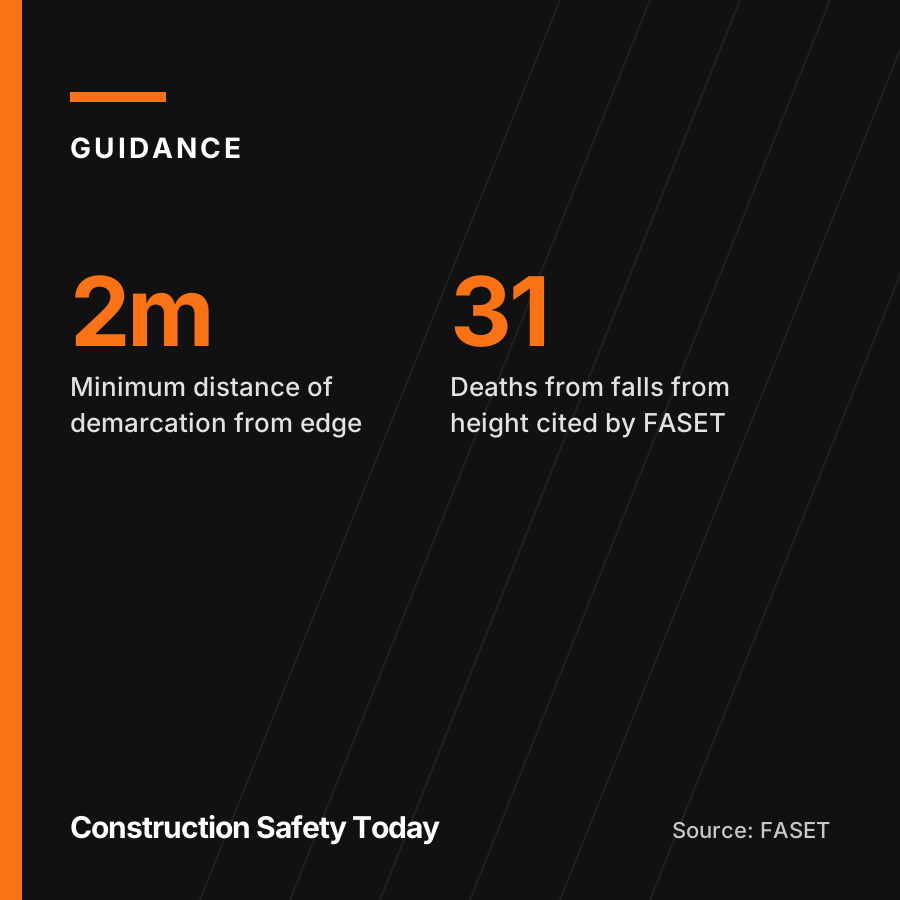
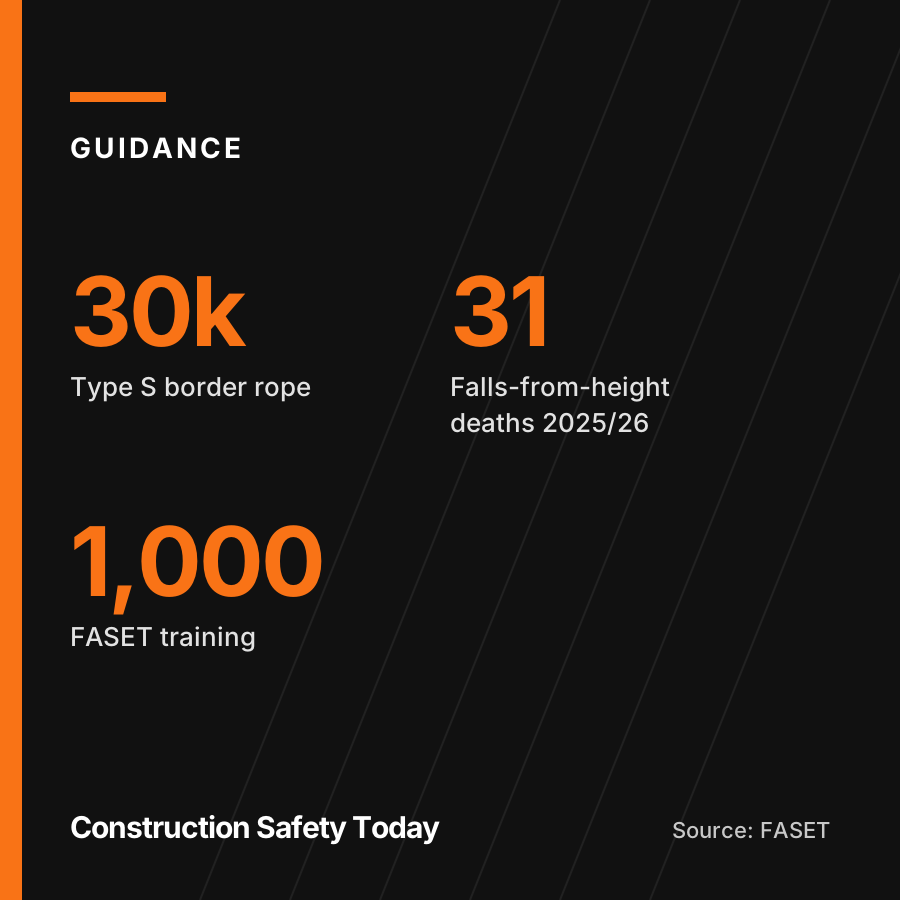
In a separate news item on its website, FASET said HSE figures showed 31 workers died following falls from height in 2025/26, an 11% reduction on the previous year, but still about one in four worker deaths.
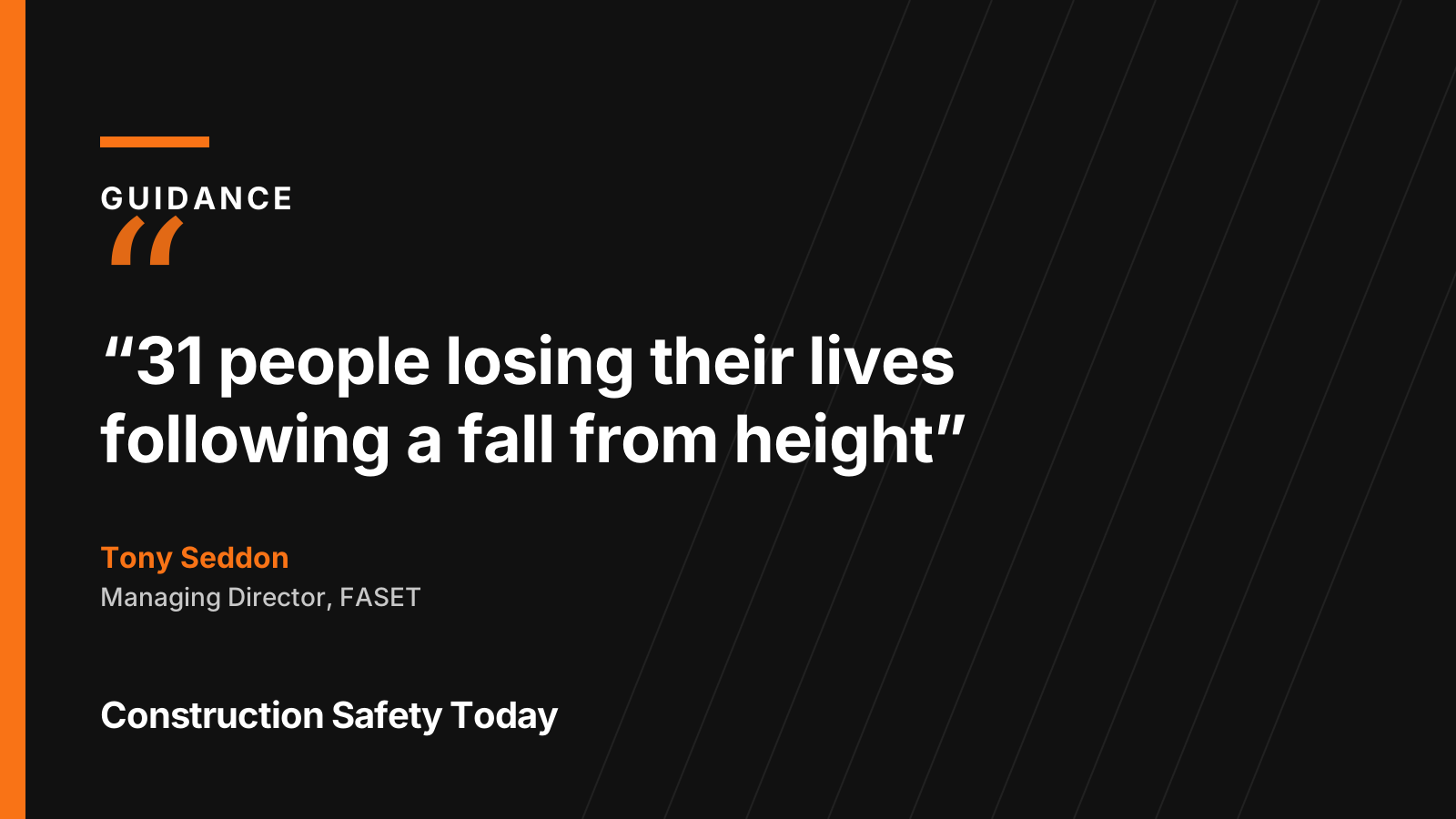
Tony Seddon, managing director of FASET, said any reduction in workplace fatalities was welcome, but "31 people losing their lives following a fall from height" was 31 too many.
HSE's guidance on fragile surfaces says falls through materials such as fibre-cement roofs and rooflights account for 22% of fatal falls from height in construction. The regulator says almost one in five deaths in construction work involve roof work, and that all roofs should be treated as fragile until a competent person has confirmed otherwise.
HSE defines a fragile surface as one that will not safely support the weight of a person and any materials they are carrying. It says work on or near such surfaces needs a combination of stagings, guard rails, fall restraint, fall arrest and safety nets, with nets slung beneath and close to the roof, and that those doing the work must be trained, competent and instructed in the precautions required.
About FASET
FASET describes itself as the established trade association and training body for its sector and says it has supported members since 2003. Every member company undergoes a UKAS and SSiP accredited audit, according to the association.
FASET said it trains more than 1,000 candidates a year, publishes more than 100 free guidance documents and has a network of more than 65 audited member companies. Its Health, Safety and Technical committee meets regularly to develop and review that guidance, which is grouped into eight categories including safety netting, edge protection, stair towers, access platform decking, tensioned access platforms, roof over-netting and demarcation.
The roof over-netting document is available to download from FASET's website.
Sources
- FASET (opens in a new tab) (accessed 2026-10-08)
- FASET (opens in a new tab) (accessed 2026-10-08)
- FASET (opens in a new tab) (accessed 2026-10-08)
- FASET (opens in a new tab) (accessed 2026-10-08)
- FASET (opens in a new tab) (accessed 2026-10-08)
- Health and Safety Executive (opens in a new tab) (accessed 2026-10-08)
- Health and Safety Executive (opens in a new tab) (accessed 2026-10-08)
This story was researched from the primary sources above and checked against them before publication. Spotted an error? Tell us and we will correct it promptly.