guidance
RAIB refers Welshpool ETCS wrong side failure to Network Rail after wheel diameter error
The Rail Accident Investigation Branch has written to Network Rail after a monitoring train's on-board ETCS equipment told its driver 610 metres remained when it had already reached the end of its movement authority.
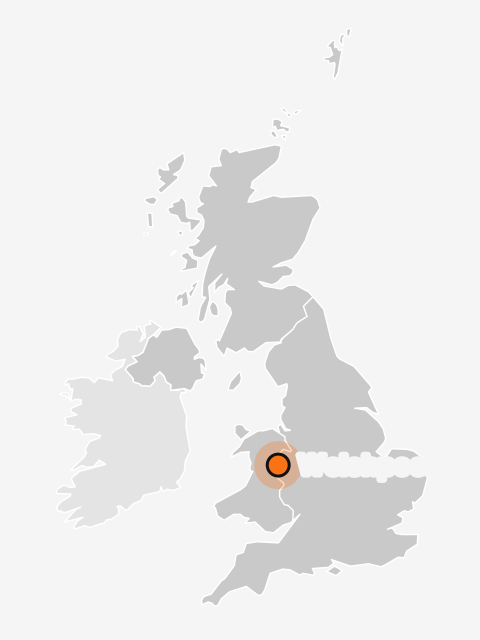
The Rail Accident Investigation Branch (RAIB) has written to Network Rail about potential weaknesses in on-board European Train Control System (ETCS) protection after a wrong side failure near Welshpool, Powys, on 15 September 2026.
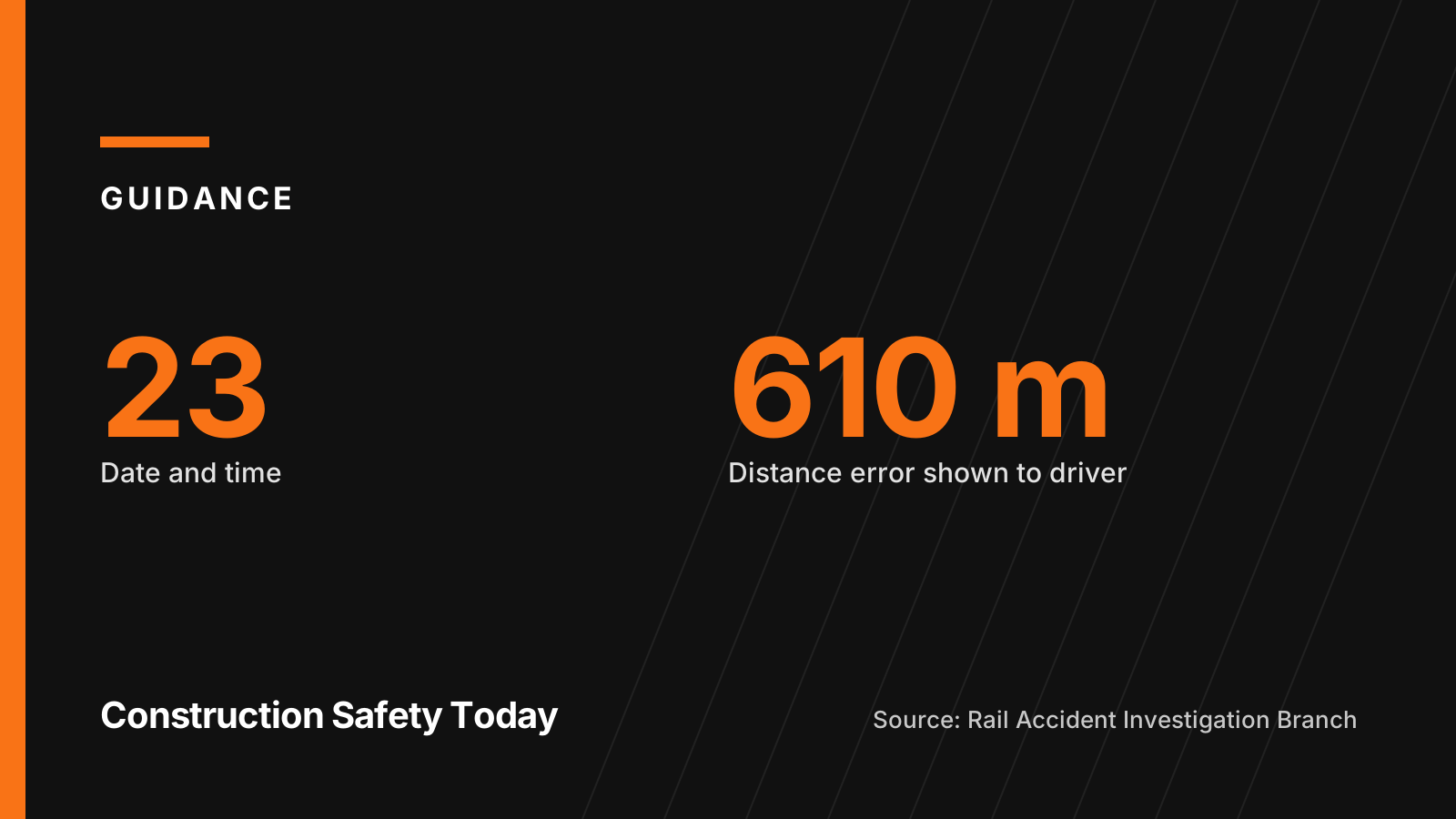
RAIB published the findings of its preliminary examination on 21 October 2026. It said the failure happened at about 23:52, when an infrastructure monitoring train running under ETCS Level 2 supervision stopped at the block marker that should have marked the end of its movement authority.
Despite the train having reached the marker, the on-board signalling equipment told the driver that 610 metres remained before the end of the movement authority. RAIB attributed the error to the on-board ETCS equipment using incorrect wheel diameter information to calculate the train's position.
What the examination found
According to RAIB, post-incident examination identified that a component of the on-board ETCS equipment had prevented the correct wheel diameter from being stored after routine maintenance to the train.
Two further layers of protection should have caught the resulting error. An independent speed measurement system on the train is intended to supplement the distances generated from the wheel diameter, and track-mounted balises are intended to reset the distance on the train if inaccuracies occur. RAIB said neither proved effective at correcting the inaccurate distance in this case.
Why RAIB is not investigating further
RAIB said a wrong side signalling failure that did not result in an accident or near miss would normally be investigated by the rail industry rather than by RAIB. After reviewing the preliminary examination, it concluded that it will not conduct a full investigation.
However, the branch said the findings indicate potential weaknesses in the protection arrangements within the on-board ETCS equipment which, in its view, merit further consideration by Network Rail during its own investigation. RAIB has therefore written to Network Rail to highlight the circumstances of the incident and draw its attention to those issues.
Copies of the letter have gone to the Office of Rail and Road (ORR), which RAIB described as the health and safety regulator for the mainline railway, and to the operator of the infrastructure monitoring train.
RAIB says its investigations are focused solely on improving safety. It is not a prosecuting body and does not apportion blame or liability.
Earlier Cambrian findings
This is not the first time RAIB has examined the integrity of ETCS on the Cambrian routes. The branch pointed to its earlier investigation into the loss of safety-critical data, published as report 17/2019, in which it found that a support system had caused a failure of the higher integrity signalling system and that appropriate protection against foreseeable failures had not been provided.
That report concerned the morning of 20 October 2017, when four trains travelled over the Cambrian Coast line in Gwynedd while temporary speed restriction data was not being sent. The data had not been uploaded during an automated signalling computer restart the previous evening. RAIB found that one train approached a level crossing at 80 km/h (50 mph) against a temporary speed restriction of 30 km/h (19 mph), and that the software product included a single point of failure.
Report 17/2019 recommended that Network Rail, aided by the wider rail industry, improve its safety assurance process. It also recommended that Hitachi STS (formerly Ansaldo STS) provide a technical solution for the Cambrian lines and review its safety assurance processes.
The safety lesson
RAIB's summary of learning on wrong side failures of signalling, published in May 2023, records the 2017 Cambrian event among its case studies. The summary notes that software is becoming increasingly common in safety-critical functions across the railway industry, and warns that the industry is at risk of repeating the errors of the past if organisational memory is not constantly maintained.
The ORR describes the European Rail Traffic Management System (ERTMS) as a European train control system to be introduced on the GB rail network over the next 30 years, with ETCS as its on-board signalling equipment element. The ORR acts as the National Safety Authority for ERTMS, as required by the Technical Specification for Interoperability (TSI).
Network Rail's investigation into the Welshpool incident, to which RAIB has referred its findings, is the next step.
On the record: Office of Rail and Road
Sources
- Rail Accident Investigation Branch (GOV.UK) (opens in a new tab) (accessed 2026-10-21)
- Rail Accident Investigation Branch (GOV.UK) (opens in a new tab) (accessed 2026-10-21)
- Rail Accident Investigation Branch (GOV.UK) (opens in a new tab) (accessed 2026-10-21)
- Rail Accident Investigation Branch (GOV.UK) (opens in a new tab) (accessed 2026-10-21)
- Office of Rail and Road (opens in a new tab) (accessed 2026-10-21)
This story was researched from the primary sources above and checked against them before publication. Spotted an error? Tell us and we will correct it promptly.