guidance
Bed spring maker fined £80,000 after warehouse truck collision on route change not properly risk assessed
HSE said Leggett & Platt Components Europe Limited rerouted pallet trucks and fork lifts through a busy loading area during a machinery installation at its Barnsley warehouse without properly risk assessing the changes.
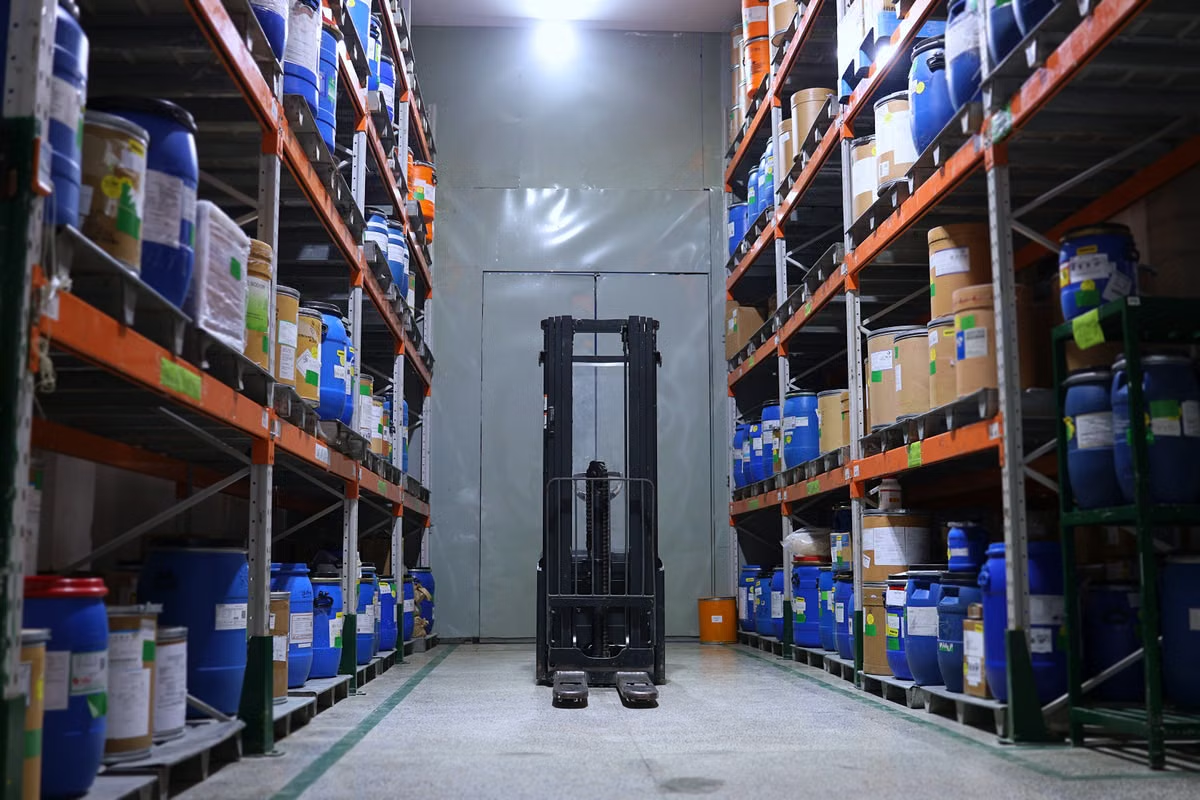
Leggett & Platt Components Europe Limited has been fined £80,000 after a 20-year-old worker suffered multiple foot fractures when his ride-on pallet truck collided with a fork lift truck at the firm's Long Royd warehouse in Barnsley.
The bed spring manufacturer pleaded guilty at Leeds Magistrates Court on 20 October 2026 to breaching Section 2(1) of the Health and Safety at Work etc. Act 1974 in relation to the safe use of workplace transport in the warehouse, the Health and Safety Executive (HSE) said. It was also ordered to pay costs of £3,374.
The incident on 14 November 2024 injured Charlie O'Dowd, who was then 20, according to the HSE. He was using an unguarded ride-on pallet truck during the installation of new automated machinery when it struck a fork lift truck driven by another employee. As well as the fractures, he suffered longer-term nerve damage. CCTV captured the collision.
HSE Inspector Chris Parker said: "This case highlights the importance of carefully assessing the wider safety implications of any changes made within a workplace, even where those changes may be temporary."
What the investigation found
The HSE's investigation found the company had changed its workplace transport routes to make room for the installation works. As a result, ride-on pallet trucks and fork lift trucks had to share the same routes within a busy stock loading area, where visibility was limited and vehicle movements had increased.
The regulator concluded that the company had concentrated on installing the new machinery and had not adequately considered how significant changes to its transport arrangements would affect worker safety. The route changes had not been properly risk assessed before they were put in place, the HSE said.
Parker said: "When workplace transport routes are altered, employers must ensure that the risks created by those changes are properly assessed and controlled before they are introduced."
He added that the incident could have been prevented had suitable planning and risk assessment been carried out.
The statutory duty
Section 2(1) of the 1974 Act places a duty on every employer to ensure, so far as is reasonably practicable, the health, safety and welfare at work of all its employees, according to the legislation as published on legislation.gov.uk.
The HSE said it does not pass sentences, set guidelines or collect fines. Courts must follow the relevant sentencing guidelines unless satisfied that doing so would be contrary to the interests of justice. The Sentencing Council's definitive guideline for health and safety offences was published on 3 November 2015 and came into force on 1 February 2016.
The prosecution was brought by HSE enforcement lawyer Julian White and paralegal officer Zara Salman, with advocacy by enforcement lawyer Arfaq Nabi.
The regulator's guidance
The HSE's workplace transport guidance says accidents involving transport in the workplace happen every year, some of them fatal. It says a workplace transport risk assessment must consider all transport activities, including loading and unloading, and that employers should provide separate routes for pedestrians and vehicles where possible and avoid reversing where possible.
The guidance also says lift truck operators should be reassessed at regular intervals or when new risks arise, such as changes to working practices.
On route design, the HSE says that by law pedestrians or vehicles must be able to use a traffic route without causing danger to the health or safety of people, and that roadways and footpaths should be separate whenever possible.
The wider figures
The HSE's latest figures record 126 workers killed in work-related accidents in 2025/26 under RIDDOR, the Reporting of Injuries, Diseases and Dangerous Occurrences Regulations. Being struck by a moving vehicle is listed among the main kinds of fatal accident, with 24 deaths recorded under that heading.
Employers reported 59,219 non-fatal injuries to employees under RIDDOR in 2024/25, according to the HSE.
Sources
- Health and Safety Executive (opens in a new tab) (accessed 2026-10-23)
- Health and Safety Executive (opens in a new tab) (accessed 2026-10-23)
- Health and Safety Executive (opens in a new tab) (accessed 2026-10-23)
- Health and Safety Executive (opens in a new tab) (accessed 2026-10-23)
- Health and Safety Executive (opens in a new tab) (accessed 2026-10-23)
- legislation.gov.uk (The National Archives) (opens in a new tab) (accessed 2026-10-23)
- Sentencing Council (opens in a new tab) (accessed 2026-10-23)
This story was researched from the primary sources above and checked against them before publication. Spotted an error? Tell us and we will correct it promptly.