campaigns
HSE launches noise and vibration campaign urging employers to act before damage is done
The regulator's Assess, Control, Protect campaign names construction first among the sectors where noise and hand-arm vibration are common hazards, and builds on a pledge targeting zero new HAVS cases by 2035.
The Health and Safety Executive (HSE) launched a noise and vibration campaign on 13 October 2026, urging employers to assess risks, cut exposure and protect workers before permanent hearing loss or hand-arm vibration syndrome sets in.
The regulator said about 15,000 workers a year develop hearing problems caused or made worse by work, and it estimates that one in five workers is exposed to harmful noise levels. Its Work Right campaign page puts the same figure more cautiously, saying around one in five workers may be exposed.
HSE named construction first in its list of sectors where noise and vibration are common hazards, ahead of manufacturing, agriculture, utilities, waste management, engineering, maintenance and entertainment and events.
Chris Steel, Principal Specialist Inspector (Noise and Vibration) at HSE, said: "Employers shouldn't wait for symptoms to appear. They need to identify where workers are at risk, reduce exposure and make sure the right controls are in place."
The three steps
The campaign promotes a three-step approach: Assess, Control, Protect. The Control step asks employers to reduce exposure at source by choosing quieter or lower-vibration equipment, maintaining tools and machinery, introducing engineering controls and adopting safer ways of working.
The campaign website states that employers whose workers are exposed to noise or vibration must assess the risks and put effective controls in place, and that most of the resulting harm is preventable with the right controls.
Employers' legal duties come from the Control of Noise at Work Regulations 2005 and the Control of Vibration at Work Regulations 2005, HSE said.
Steel said: "Noise and vibration-related ill health is preventable, but the consequences can last a lifetime."
What it means on site
HSE's construction guidance says workers are at higher risk from noise if they regularly use or work near power tools such as concrete breakers, pokers and compactors. It tells construction employers not to rely on hearing protection as the only control.
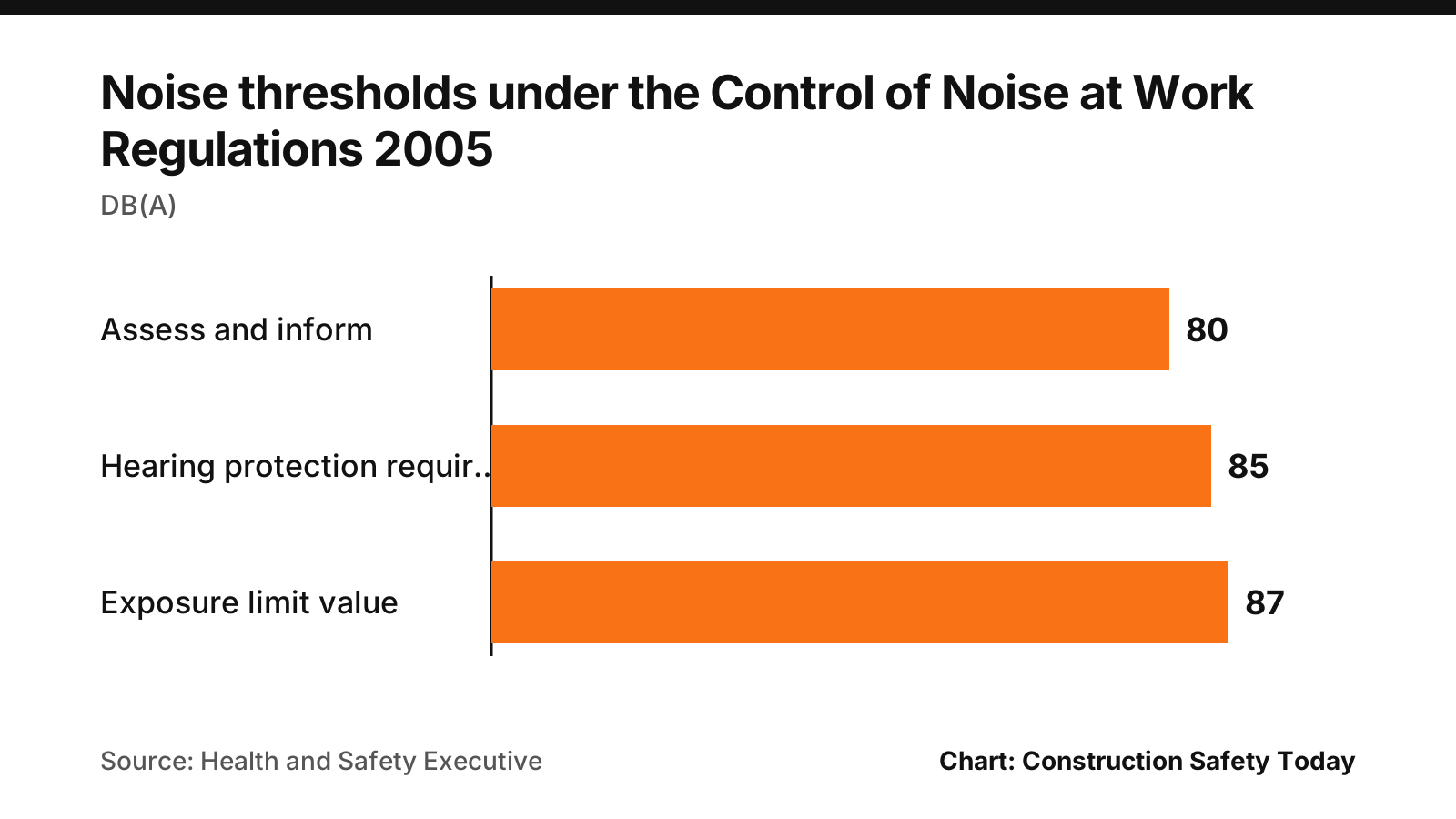
The noise regulations set three thresholds. At 80 dB(A) employers must assess the risk and give workers information and training. At 85 dB(A) they must provide hearing protection and hearing protection zones. Workers must not be exposed above the exposure limit value of 87 dB(A).
| Threshold under the noise regulations | Level |
|---|---|
| Assess risk, give information and training | 80 dB(A) |
| Provide hearing protection and protection zones | 85 dB(A) |
| Exposure limit value | 87 dB(A) |
On vibration, HSE says construction workers are particularly at risk because of the work they do and the equipment they use. Its guidance says workers who regularly use hammer action tools for more than about an hour a day may be at high risk, meaning exposure above the exposure limit value, and it advises rotating workers where tools require continual or frequent use.
The pledge and the figures
HSE said the campaign builds on its Prevention Programme, including the HAVS Risk Reduction Pledge, and was launched during Bone and Joint Health Week.
According to the Council for Work & Health, which hosts the pledge, it commits signatories to achieving zero new HAVS cases by 2035. The council's page says Cadent gas led the way by setting up a hand-arm vibration group and inviting organisations across the industry to join, after HSE held a Prevention Summit asking employers to manage health risks proactively.
HSE's own statistics record 220 new cases of hand-arm vibration syndrome assessed for Industrial Injuries Disablement Benefit in 2024.
What happens next
HSE is running a free session, Vibration Risk Management: Getting your priorities right, on 21 October 2026. The regulator said it will help employers and consultants develop proportionate, prevention-led control strategies for hand-arm vibration.
Sources
- Health and Safety Executive (opens in a new tab) (accessed 2026-10-13)
- Health and Safety Executive (Work Right campaign) (opens in a new tab) (accessed 2026-10-13)
- Council for Work & Health (opens in a new tab) (accessed 2026-10-13)
- Health and Safety Executive (opens in a new tab) (accessed 2026-10-13)
- Health and Safety Executive (opens in a new tab) (accessed 2026-10-13)
- Health and Safety Executive (opens in a new tab) (accessed 2026-10-13)
- Health and Safety Executive (opens in a new tab) (accessed 2026-10-13)
- Health and Safety Executive (opens in a new tab) (accessed 2026-10-13)
This story was researched from the primary sources above and checked against them before publication. Spotted an error? Tell us and we will correct it promptly.