guidance
FASET guidance sets 2m minimum for temporary demarcation on roofs and open floors
The safety net trade body says a demarcation barrier must sit at least 2m back from an open edge, must never be treated as fall protection, and cannot be formed from bunting, tape or painted lines.
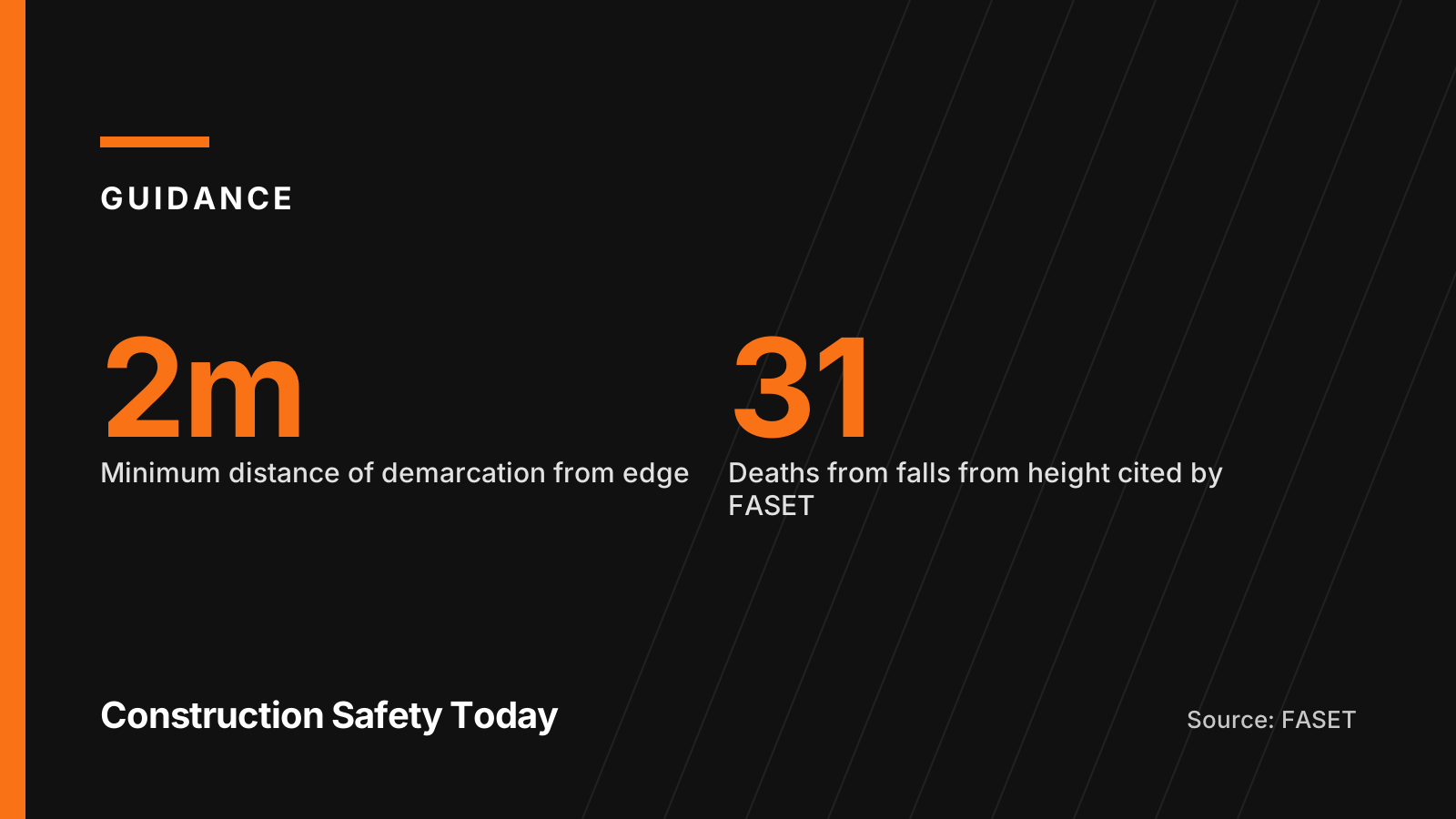
The Fall Arrest Safety Equipment Training association (FASET) is highlighting guidance on temporary demarcation systems that says any such barrier must sit at least 2m from an open edge and must never be relied on to stop a person falling.
The guidance, available on the trade body's website with the full document as a download, is aimed at work on large roofs or floors where FASET says it may not be reasonably practicable to install edge protection around the whole perimeter.
In those cases, FASET said, a temporary demarcation system can provide a simple, continuous barrier to discourage access to the open edge and to identify safe areas and access routes. It does not provide fall protection or debris containment.
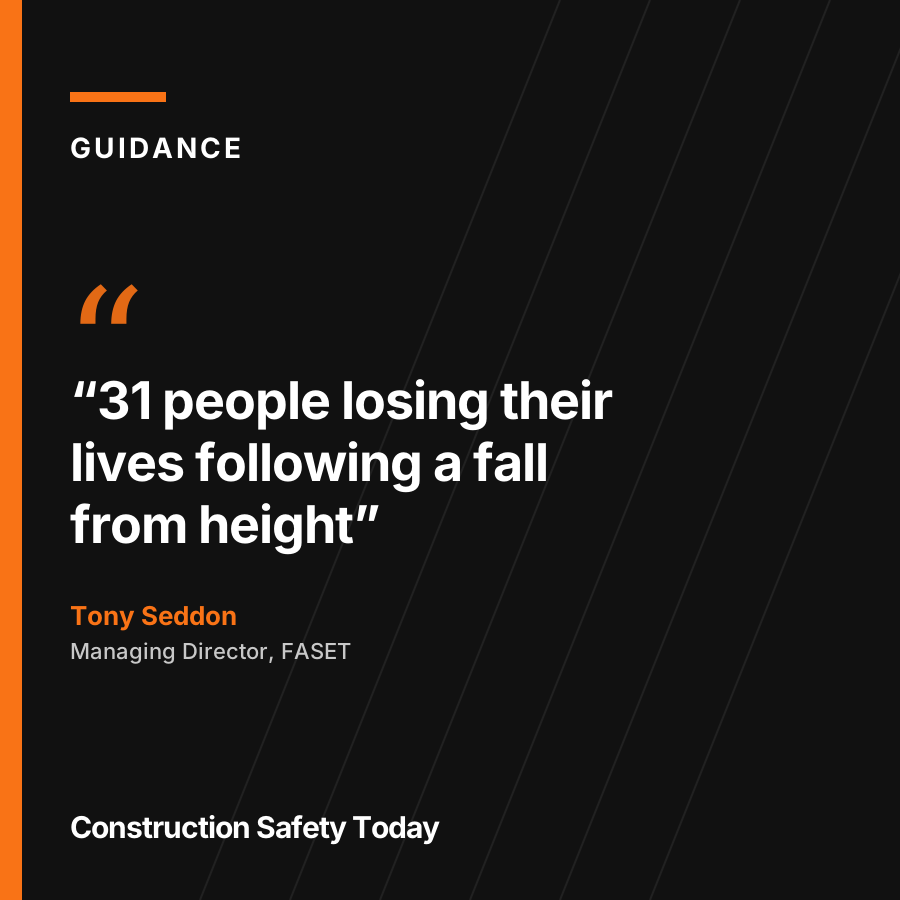
Tony Seddon, Managing Director of FASET, said in a separate statement on workplace fatality figures: "Falls from height have remained the leading cause of workplace fatalities for far too long."
What the guidance says
FASET draws a firm line between demarcation and temporary edge protection. A demarcation system is a visual barrier, the guidance says, and should never be crossed unless additional fall protection measures are in place.
Bunting, tape or foot-level markings such as a painted line are not sufficient, according to the guidance.
Where a risk assessment identifies that demarcation is needed, the system must be positioned a minimum of 2m from the edge. FASET said that distance will often need to be increased, with the risk assessment considering all stages of the work programme.
The web page carries only the introduction and the design and suitability sections; the rest of the document is in the download. On FASET's site it sits alongside documents on the use of soft landing systems and inspection requirements for platform decking.
The regulatory frame
The Health and Safety Executive (HSE) says all work on roofs is highly dangerous, even if a job takes only a few minutes, and that almost one in five deaths in construction work involve roof work. The main causes of death and injury in roof work, the regulator says, are falls from roof edges or openings.
HSE adds that falls from flat roof edges can be prevented by simple edge protection arrangements, and that all roofs should be treated as fragile until a competent person has confirmed they are not.
The Work at Height Regulations 2005 exist to prevent death and injury caused by a fall from height, according to HSE. Employers and those controlling work at height must ensure it is properly planned, supervised and carried out by competent people.
HSE's figures show 126 workers were killed in work-related accidents in Great Britain in 2025/26. In FASET's statement on those figures, Seddon said 31 people still failed to return home from work because of a fall from height.
"The best safety record is never one you inherit; it's one you maintain every single day," he said.
Who is behind the guidance
FASET describes itself as the trade association and training body for the safety net and temporary safety systems industry. Its members undergo a UKAS and SSiP accredited audit.
The association's guidance is developed and reviewed by its Health, Safety and Technical committee and is freely available. FASET said the material is aimed at increasing the safety of all trades working with and around safety nets and temporary safety systems.
The full Temporary Demarcation Systems guidance can be downloaded from FASET's demarcation guidance page.
Sources
- FASET (opens in a new tab) (accessed 2026-10-08)
- FASET (opens in a new tab) (accessed 2026-10-08)
- FASET (opens in a new tab) (accessed 2026-10-08)
- FASET (opens in a new tab) (accessed 2026-10-08)
- FASET (opens in a new tab) (accessed 2026-10-08)
- Health and Safety Executive (opens in a new tab) (accessed 2026-10-08)
- Health and Safety Executive (opens in a new tab) (accessed 2026-10-08)
- Health and Safety Executive (opens in a new tab) (accessed 2026-10-08)
This story was researched from the primary sources above and checked against them before publication. Spotted an error? Tell us and we will correct it promptly.