campaigns
HSE tells construction employers to assess noise and vibration risks before damage is done
The regulator's three-step assess, control, protect campaign, now being circulated by CHSG, warns that around 15,000 workers a year develop work-related hearing problems and names construction first among at-risk sectors.

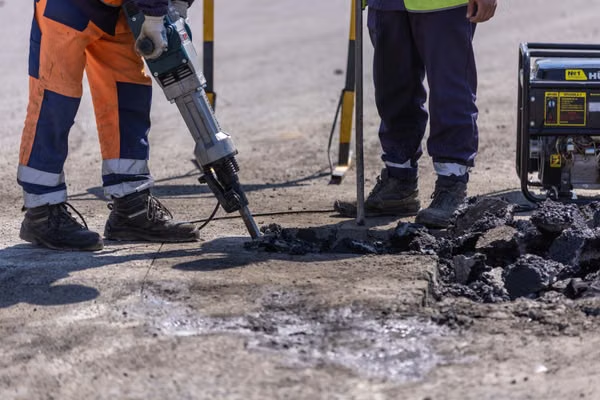
The Health and Safety Executive (HSE) has launched a noise and vibration campaign that names construction first among the sectors where workers face hearing loss and hand-arm vibration syndrome, and tells employers not to wait for symptoms before acting.
CHSG highlighted the campaign in a post on 27 October 2026. CHSG said hearing loss, tinnitus and hand-arm vibration syndrome (HAVS) are all lasting effects of noise and vibration on site, and that HSE's three-step assess, control, protect campaign gives information to workers and employers.
HSE said around 15,000 workers develop hearing problems caused or made worse by work every year, and that an estimated one in five workers is exposed to harmful levels of noise at work.
Chris Steel, HSE Principal Specialist Inspector (Noise and Vibration), said: "Noise and vibration-related ill health is preventable, but the consequences can last a lifetime."
The three steps
HSE launched the campaign during Bone and Joint Health Week, building on its wider work to reduce HAVS. Its campaign page on the Work Right site, hosted on GOV.UK, frames protecting workers from noise and vibration as a legal requirement: if workers are exposed to noise or vibration, employers must assess the risks and put effective controls in place. Most of the harm, the page says, is preventable with the right controls.
The regulator sets out the duty in three steps. Under "assess", employers should identify who may be exposed to noise and vibration, understand the risks and carry out suitable and sufficient risk assessments.
Under "control", they should reduce exposure at source by choosing quieter or lower-vibration equipment and maintaining tools and machinery.
Under "protect", where risks remain, they should provide suitable hearing protection and arrange health surveillance where required.
Steel said: "They need to identify where workers are at risk, reduce exposure and make sure the right controls are in place."
Alongside construction, the campaign page lists manufacturing, utilities, agriculture and waste management as industries whose workers are often exposed.
The legal thresholds
The campaign sits on two sets of regulations that have been in force for two decades. According to HSE, the Control of Noise at Work Regulations 2005 came into force for all industry sectors in Great Britain on 6 April 2006. Under them, the level at which employers must provide hearing protection and hearing protection zones is 85 dB(A), and there is also an exposure limit value of 87 dB(A) that takes account of hearing protection.
The Control of Vibration at Work Regulations 2005 came into force on 6 July 2005. HSE said they set an exposure action value of 2.5 m/s2 A(8) and an exposure limit value of 5.0 m/s2 A(8) that should not be exceeded.
The figures
HSE's official statistics give two different views of the scale of harm. The 15,000 figure used in the campaign comes from the Labour Force Survey and is an estimate of prevalent cases of work-related hearing problems each year, with a 95% confidence interval of 8,000 to 21,000.
Counts under the Industrial Injuries Disablement Benefit (IIDB) scheme are much lower. HSE said the IIDB test for occupational deafness requires claimants to have a substantial measured loss of hearing in both ears of greater than 50 dB.
For vibration, HSE's statistics based on new IIDB assessments up to and including 2024 record 220 new cases of hand-arm vibration syndrome in 2024.
The HAVS pledge
HSE said the campaign complements its Prevention Programme to reduce vibration-related ill health, including the HAVS Risk Reduction Pledge. The Council for Work and Health, whose page HSE links to, describes the pledge as launched by utilities sector organisations. The pledge commits signatories to zero new HAVS cases by 2035.
Steel said the campaign was intended to help employers turn that commitment into practical action. The campaign materials are available on HSE's Work Right site.
Sources
- CHSG (Construction Health & Safety Group) (opens in a new tab) (accessed 2026-10-28)
- Health and Safety Executive (opens in a new tab) (accessed 2026-10-28)
- Health and Safety Executive (Work Right, GOV.UK campaign site) (opens in a new tab) (accessed 2026-10-28)
- Health and Safety Executive (opens in a new tab) (accessed 2026-10-28)
- Health and Safety Executive (opens in a new tab) (accessed 2026-10-28)
- Health and Safety Executive (opens in a new tab) (accessed 2026-10-28)
- Health and Safety Executive (opens in a new tab) (accessed 2026-10-28)
- Council for Work and Health (opens in a new tab) (accessed 2026-10-28)
This story was researched from the primary sources above and checked against them before publication. Spotted an error? Tell us and we will correct it promptly.