guidance
FASET sets out procedure for taking safety nets out of service at end of life
The safety net trade body's guidance requires tags to be destroyed, border ropes stripped and the net struck from the company log once it fails a UV test or is uneconomical to repair.
FASET, the trade association and training body for the safety net industry, has published guidance requiring companies to withdraw a safety net from service and destroy all its identifying tags once it fails a UV test or becomes uneconomical to repair.
The procedure was agreed by the FASET Health Safety and Technical Committee to stop nets being used beyond their safe life, the organisation said.
Under the guidance, all identifying marks and tags must be removed and destroyed. FASET said this includes manufacturer's labels, test tags, repair tags and any remaining test meshes, together with their serial numbered tags.
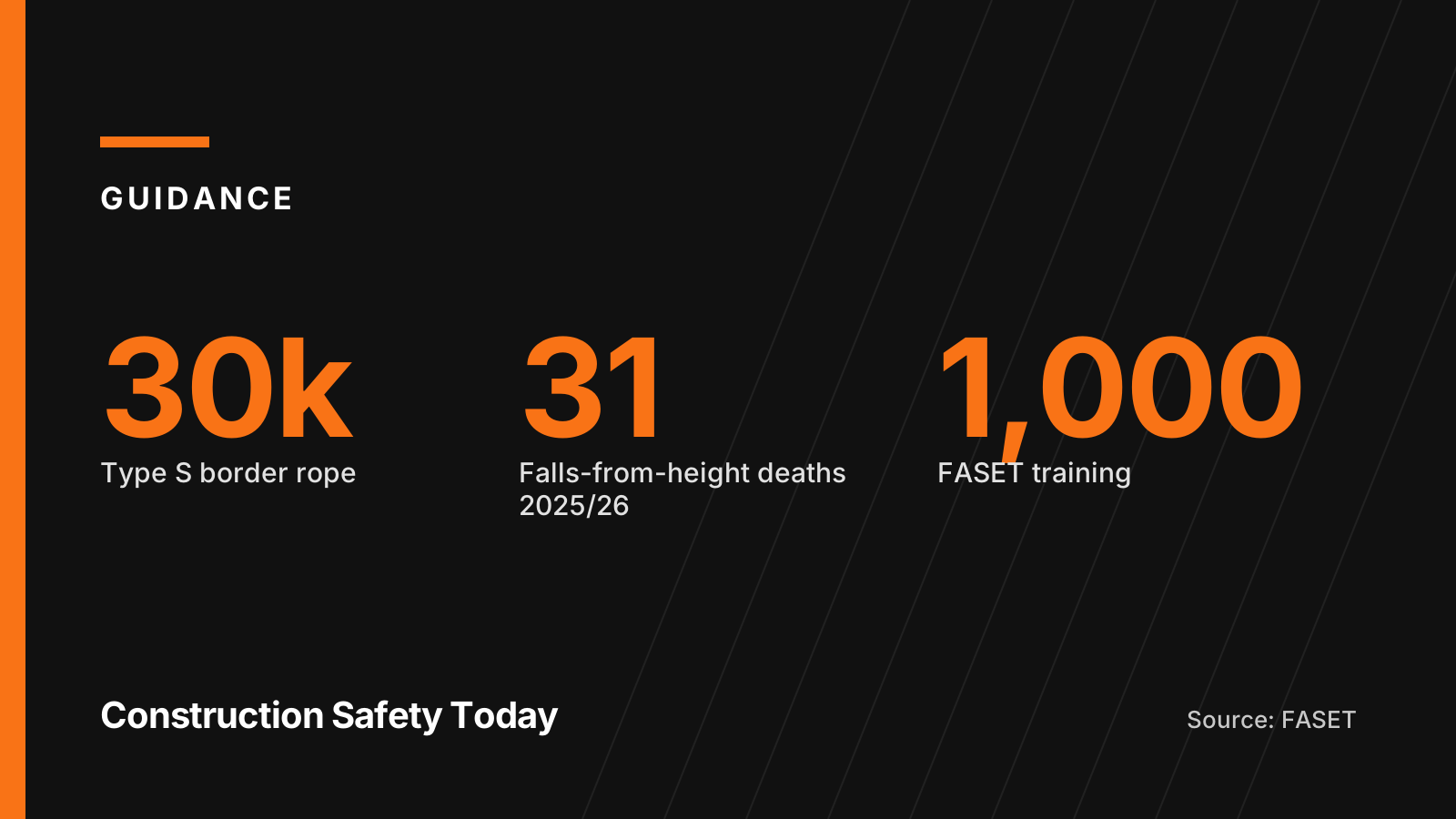
The border rope must then be removed from the perimeter of the net. FASET said the rope used in Type S nets is 30kN rope, so where it remains serviceable it can be reused as tie ropes, subject to visual inspection.
Disposal and reuse
The remaining net can be disposed of through proper waste disposal procedures, recycled for its raw material or put to alternative uses such as skip coverings, according to FASET.
Before a net is put to any further use, FASET suggests checking it to make sure no contamination remains that could be detrimental to that use.
The final step is administrative: the retired net must be removed from the company's net log, the guidance said.
FASET said its Health, Safety and Technical committee meets regularly to develop and review a range of guidance that is freely available to the industry. According to the organisation, it publishes more than 100 free guidance documents and trains more than 1,000 candidates a year.
Why it matters
The guidance sits alongside the Health and Safety Executive's (HSE) approach to work at height. HSE asks those responsible for work at height to consider measures that protect everyone at risk, known as collective protection, before measures that only protect the individual. Where the risk of a fall cannot be eliminated, HSE says the distance and consequences of a fall must be minimised by using the right type of equipment.
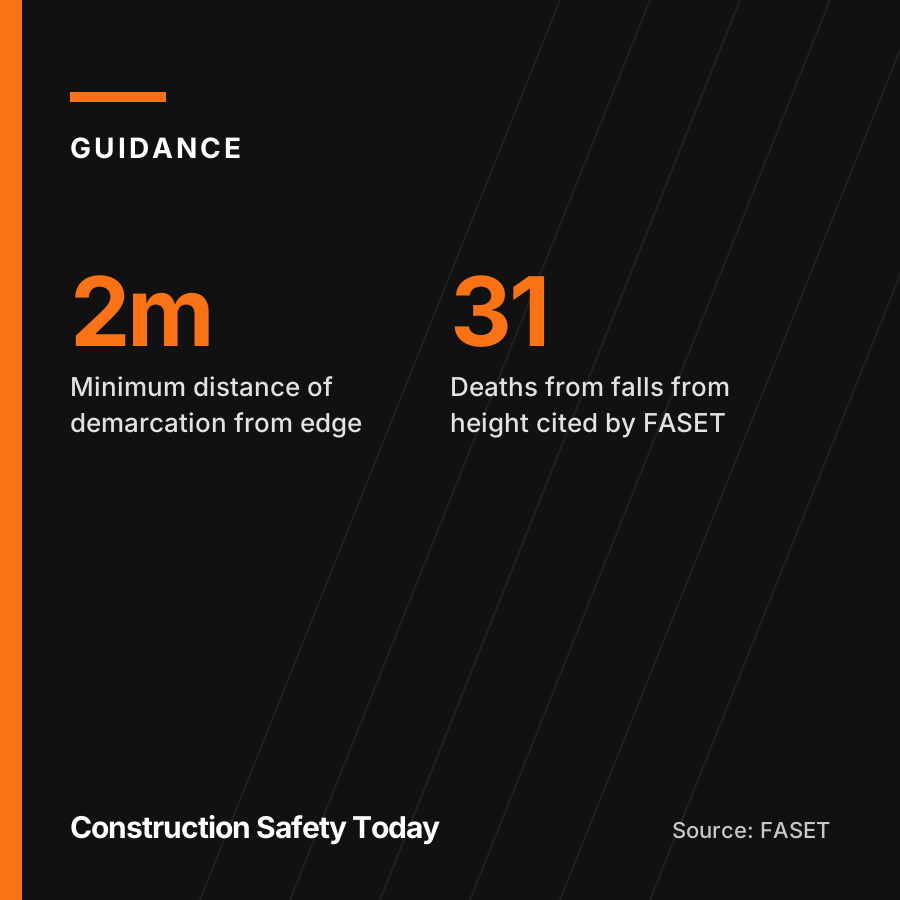
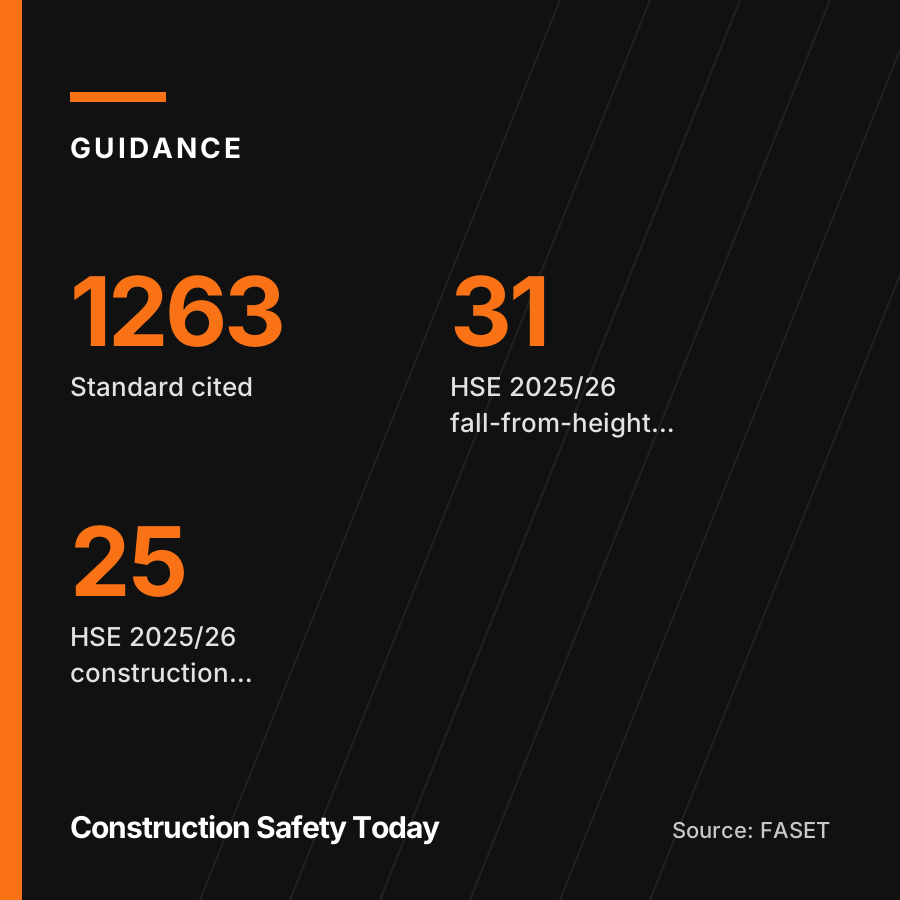
Citing HSE figures, FASET said 31 workers lost their lives following falls from height during 2025/26. That was an 11% reduction on the previous year, but falls from height still accounted for about one in four worker deaths, the organisation said.
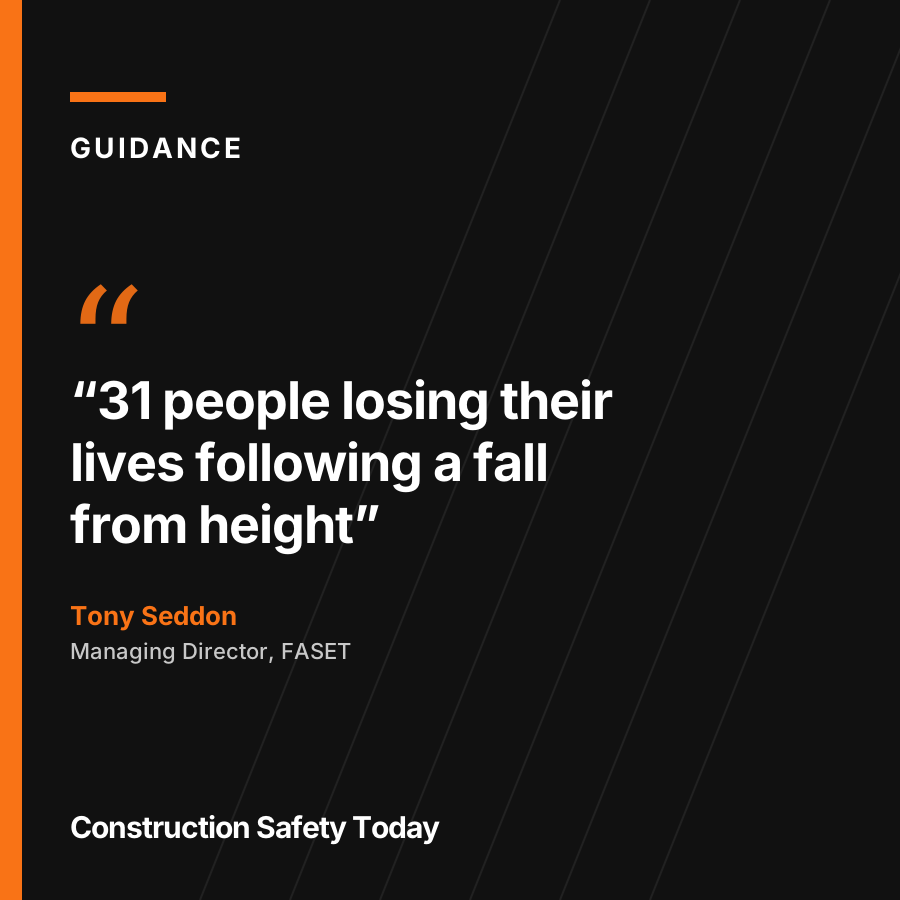
Tony Seddon, Managing Director of FASET, said: "Any reduction in workplace fatalities is welcome, but 31 people losing their lives following a fall from height is 31 too many."
The organisation
FASET, which stands for Fall Arrest Safety Equipment Training, describes itself as the established trade association and training body for the safety net and temporary safety systems industry.
In its report on its 2026 annual general meeting, FASET said membership had doubled since 2015 to 62 UK-based members, nine international members and three supporter members.
| Membership category | Members |
|---|---|
| UK-based members | 62 |
| International members | 9 |
| Supporter members | 3 |
In FASET's report on the AGM, Seddon said: "people are safer when those setting the standards listen to those doing the work. That is the role FASET and its members will continue to play for the industry."
The end-of-life procedure is one of the documents in FASET's guidance library, which the organisation said is reviewed on a regular basis by its Health, Safety and Technical committee.
Sources
- FASET (opens in a new tab) (accessed 2026-10-07)
- FASET (opens in a new tab) (accessed 2026-10-07)
- FASET (opens in a new tab) (accessed 2026-10-07)
- FASET (opens in a new tab) (accessed 2026-10-07)
- FASET (opens in a new tab) (accessed 2026-10-07)
- Health and Safety Executive (opens in a new tab) (accessed 2026-10-07)
This story was researched from the primary sources above and checked against them before publication. Spotted an error? Tell us and we will correct it promptly.