guidance
FIS presses HSE for construction-specific guidance on PPE duties to limb (b) workers
The finishes and interiors trade body has told the regulator its members remain unsure who must supply PPE under rules in force since April 2022, and wants practical guidance written for construction labour models.
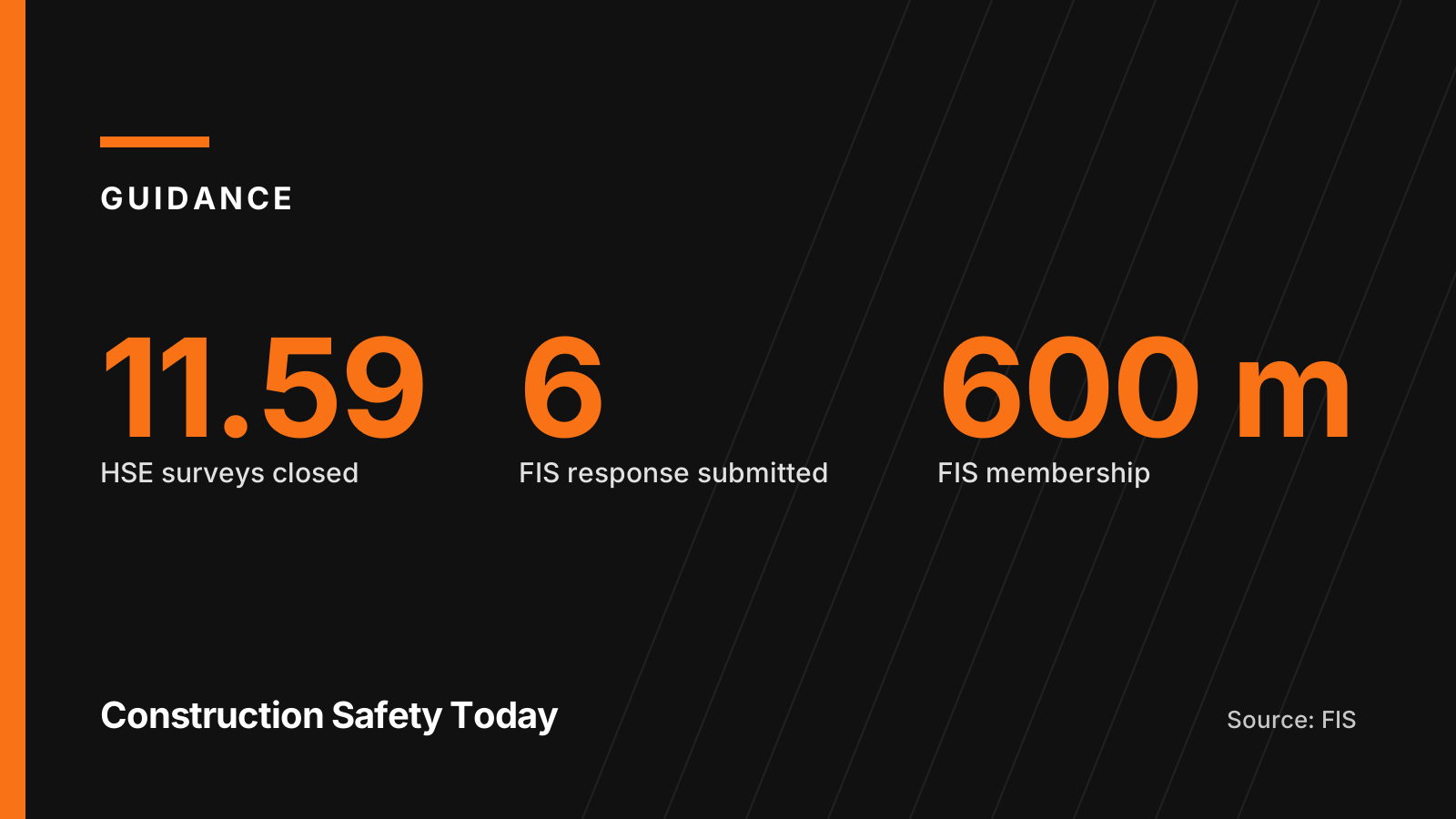
The Finishes and Interiors Sector (FIS) has submitted its formal response to the Health and Safety Executive (HSE) on the effectiveness of the Personal Protective Equipment at Work (Amendment) Regulations 2022, calling for clearer, construction-specific guidance on duties to limb (b) workers.
FIS said on 6 October that members had highlighted uncertainty over how the regulations apply, who is responsible for providing personal protective equipment (PPE), differing interpretations across the industry, worker-owned PPE and the practical challenges of compliance.
The trade body described the issue as a longstanding concern for the sector. Its response asks HSE to ensure the regulations are applied consistently and proportionately, and FIS said it would continue to engage with the regulator on next steps and future guidance.
The problems FIS raised
FIS set out the areas of difficulty when it called for member input on 3 September, saying the matter had regularly come up at its health and safety working group meetings.
Its draft response flagged confusion over how limb (b) worker status should be applied within common construction labour models, and a disconnect between Construction Industry Scheme (CIS) tax status, employment law definitions and site compliance requirements.
It raised uncertainty over who must provide PPE in labour-only subcontracting, gang labour and agency arrangements, and said differing interpretations by clients, auditors and contractors were creating compliance risk and inconsistency.
The draft also raised questions around worker-owned PPE, particularly safety footwear, and the interaction between respiratory protective equipment (RPE), facial hair policies and equality obligations. FIS said practical, construction-specific guidance was needed rather than reliance on broad legal definitions.
FIS asked members for examples of situations where confusion had arisen, challenges in the tender process over costings for safety provision, practical site issues and case studies on the cost of compliance. It said it would circulate a draft response for comment before the deadline.
HSE's review
FIS refers to the exercise as a consultation. HSE's own bulletin described it as gathering the views of businesses that engage limb (b) workers, and of those workers, through two separate surveys, one for employers and one for workers. Both closed at 11.59pm on 18 September 2026.
HSE said the aim was to understand how the regulations are working in practice and whether they continue to meet their intended objectives. The regulator said the 2022 amendment, which it refers to as PPER 22, extended employers' and employees' PPE duties to limb (b) workers.
HSE defines limb (b) workers as those with a more casual employment status who work under a contract for service, such as freelance couriers, casual agency staff and some zero-hour contract staff in the gig economy.
Background
The changes to the scope of the PPE at Work Regulations have applied since 6 April 2022, according to HSE. Where a risk assessment shows PPE is necessary, the employer must provide it free of charge, and HSE says employers need to consider carefully whether the change in law applies to their workforce and make arrangements to comply.
The amendment followed a November 2020 court judgment which found the UK had failed to adequately transpose aspects of two EU directives into domestic law, HSE's consultation record states. FIS said at the time that the High Court case, brought by the Independent Workers Union of Great Britain, found the PPE Directive required duties to extend to limb (b) workers and not only employees. HSE consulted on the amending regulations in 2021 under reference CD289.
FIS describes itself as the not-for-profit representative body for the finishes and interiors sector, with more than 600 members drawn from contractors, manufacturers and distributors of ceilings, steel framing systems, operable walls, partitions, plastering, drylining and specialist interior fit-out businesses. According to FIS, the sector has an annual turnover of £12bn, a workforce of 250,000 and accounts for about 10% of all construction work.
FIS thanked members who shared their experiences and contributed to the response. It said it would continue to engage with HSE on next steps and future guidance; no timetable for HSE to publish its findings has been given.
Sources
- FIS (opens in a new tab) (accessed 2026-10-06)
- FIS (opens in a new tab) (accessed 2026-10-06)
- FIS (opens in a new tab) (accessed 2026-10-06)
- Health and Safety Executive (opens in a new tab) (accessed 2026-10-06)
- Health and Safety Executive (opens in a new tab) (accessed 2026-10-06)
- Health and Safety Executive (opens in a new tab) (accessed 2026-10-06)
- FIS (opens in a new tab) (accessed 2026-10-06)
- FIS (opens in a new tab) (accessed 2026-10-06)
This story was researched from the primary sources above and checked against them before publication. Spotted an error? Tell us and we will correct it promptly.