guidance
FASET guidance says safety nets should be loaded only once after a fall
The safety netting trade body's guidance on reporting falls into nets says a loaded net cannot be relied on again without a manufacturer check, so it should be taken as used once.
FASET, the trade association and training body for the safety net industry, has guidance on its website setting out what should happen when a person or object falls into a safety net, with a recommendation that any net should be loaded only once.
The guidance, headed Reporting Falls Into Safety Nets, is available in full as a download. Its central point is that once a net has arrested a fall, nobody on site can tell how it would perform if it had to do so again.
FASET said safety nets are designed to give a soft landing and stretch when a person or object lands in the mesh. The net absorbs the energy of the fall either through the knots slipping and tightening, in knotted nets, or through the mesh deforming plastically, in knotless nets.
How far a loaded net stretches depends on the height of the fall, the weight of the person and any materials they are carrying, and where in the net the impact lands, the association said. Because of that, it is not possible to predict how the net will behave under further loading.
The standard
FASET said BS EN 1263-1 requires nets to be checked by a competent person after loading. That competent person is generally taken to be the manufacturer, not the company that installed the net.
Given the logistics of returning a net to its manufacturer for inspection, FASET recommends that safety nets should only be loaded once.
The note sits within FASET's series of safety netting bulletins and its good practice guide, which the association describes as giving detailed information on a range of aspects of safety netting. Related notes in the series cover loading of safety nets, hand-over and in-use inspections, and safety net rescue.
The wider picture
The guidance is a reminder of standing practice at a time when falls from height remain the main cause of workplace deaths. The Health and Safety Executive (HSE) reported on 1 July 2026 that 126 workers were killed in work-related incidents in Great Britain in 2025/26, provisionally the lowest number recorded in a single year, excluding the pandemic years 2019/20 to 2021/22.
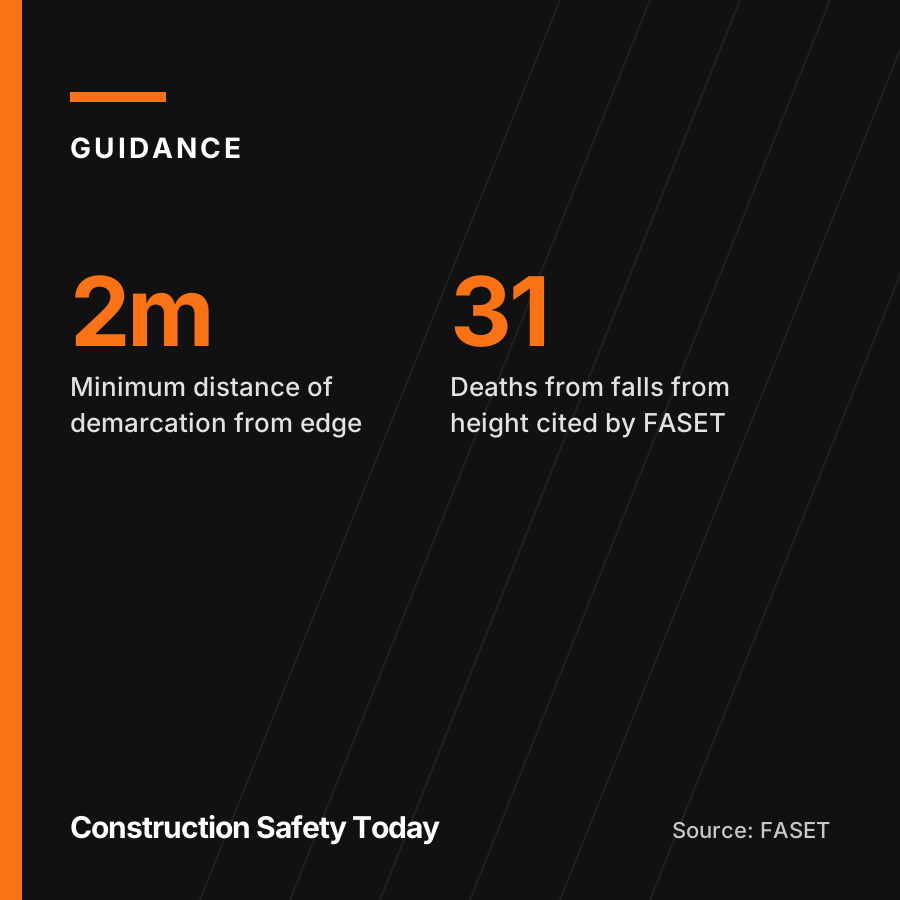
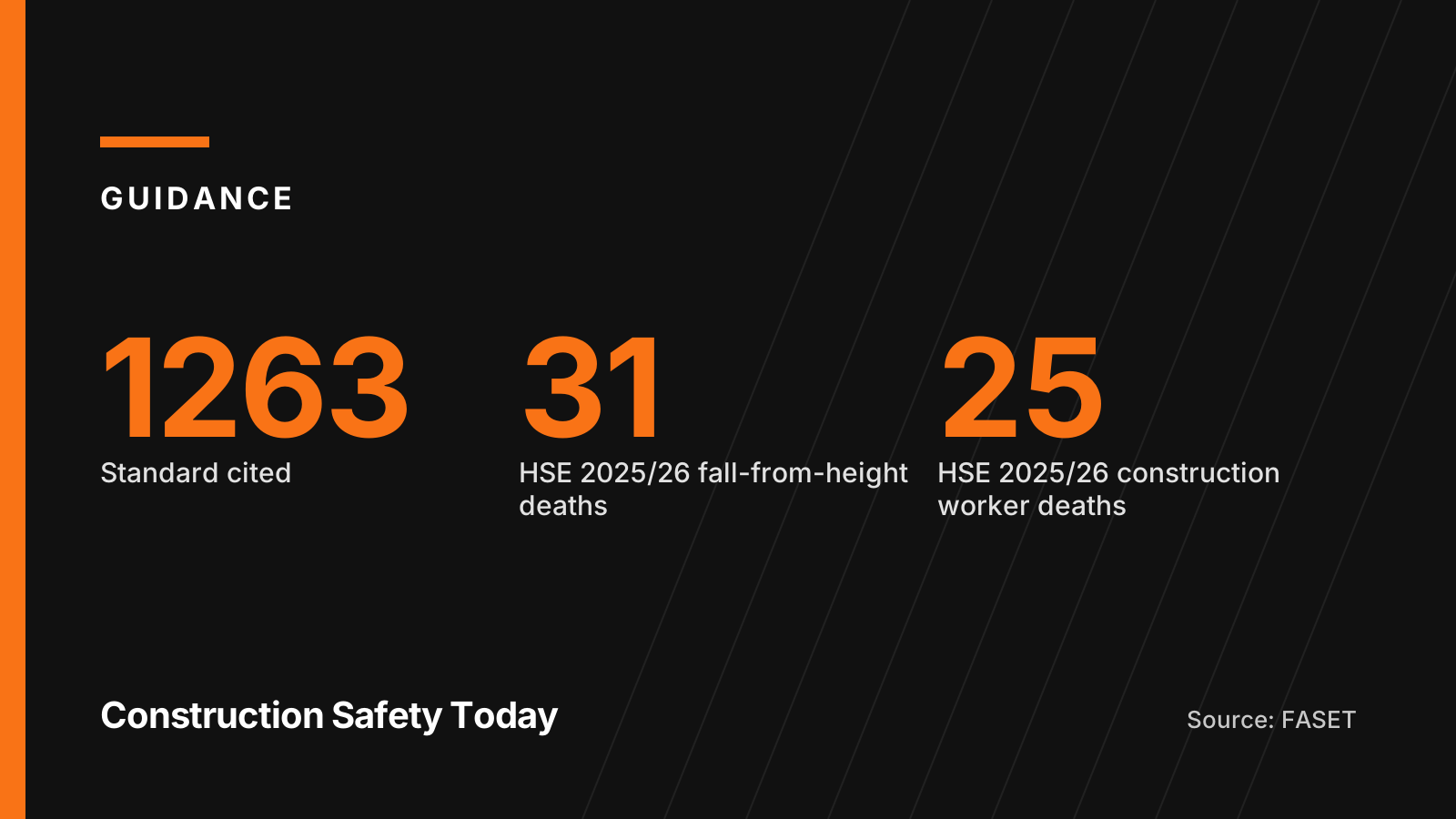
Falls from a height were again the most common cause, with 31 deaths, according to the HSE. Construction recorded 25 worker deaths, the highest of any industry. FASET has described the 2025/26 falls figure as an 11% reduction on the previous year.
Tony Seddon, Managing Director of FASET, said: "31 people losing their lives following a fall from height is 31 too many."
Responding to the HSE figures, Seddon also said: "The best safety record is never one you inherit; it's one you maintain every single day."
The HSE's own work at height guidance says working at height remains one of the biggest causes of fatalities and major injuries. It sets out a hierarchy of avoiding work at height where reasonably practicable, preventing falls, and minimising the distance and consequences of a fall. The HSE defines collective protection as equipment that does not rely on the person working at height acting for it to be effective.
About FASET
FASET (Fall Arrest Safety Equipment Training) has operated since 2003 and describes itself as the established trade association and training body for the safety net and temporary safety systems industry.
The association said it has a network of more than 65 audited member companies, each of which undergoes a UKAS and SSiP accredited audit. It trains more than 1,000 candidates a year and makes more than 100 free guidance documents available to industry.
FASET said its AGM, dinner and celebration evening takes place on Thursday 24 September 2026. Its 25th anniversary falls in 2028.
Sources
- FASET (opens in a new tab) (accessed 2026-10-07)
- FASET (opens in a new tab) (accessed 2026-10-07)
- FASET (opens in a new tab) (accessed 2026-10-07)
- FASET (opens in a new tab) (accessed 2026-10-07)
- FASET (opens in a new tab) (accessed 2026-10-07)
- Health and Safety Executive (opens in a new tab) (accessed 2026-10-07)
- Health and Safety Executive (opens in a new tab) (accessed 2026-10-07)
This story was researched from the primary sources above and checked against them before publication. Spotted an error? Tell us and we will correct it promptly.